Most people think of curry as a thick, rich sauce spooned generously over rice, hearty, indulgent, and undeniably delicious, but rarely associated with wellness. That assumption misses something important. When we talk about soup curry health benefits, the conversation has to start somewhere different: the broth.
Unlike regular curry, where flour or coconut cream thickens everything into a dense gravy, soup curry keeps its base light, clear, and deeply infused with spice. That single structural difference changes what the dish can offer the body, and it is why we believe the humble broth deserves far more credit than it usually gets.
Why the Broth Changes Everything
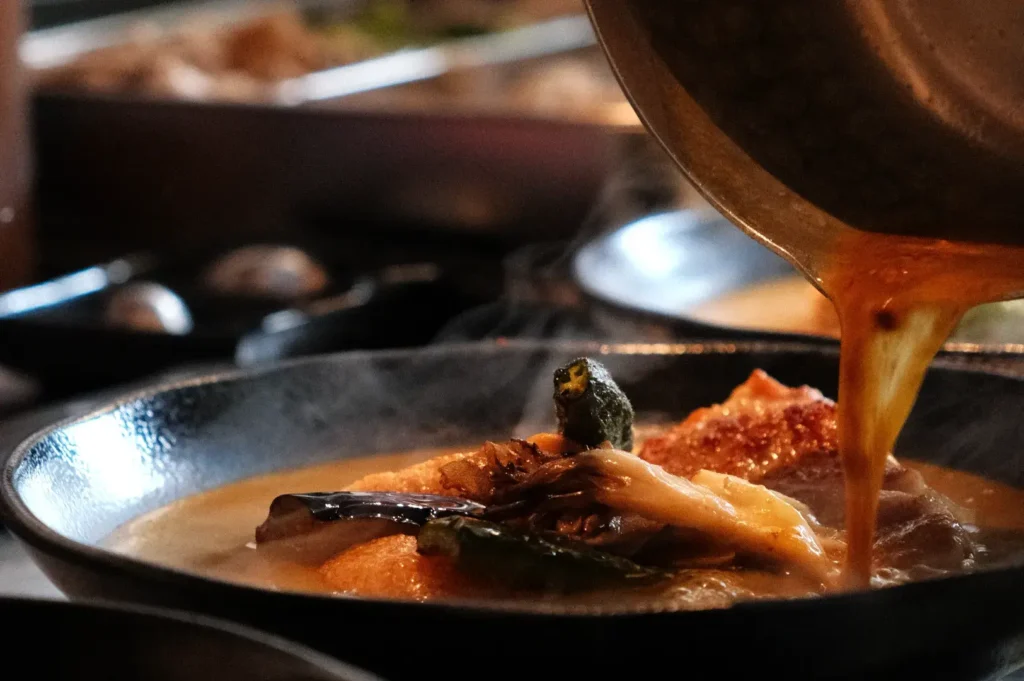
In our kitchen, the soup base begins with chicken broth simmered slowly with chicken bones, aromatics, and a blend of spices that includes curry powder and garam masala. Onions, garlic, and ginger are caramelised in a heavy bottomed pot until their natural sugars deepen, then the broth is built layer by layer rather than thickened artificially. The result is a spiced broth that carries the full character of the spices without diluting them in starch or fat.
This matters because many of the compounds responsible for the health benefits of curry, curcumin from turmeric, piperine from black pepper, allicin from garlic, are more readily absorbed and tasted when they are suspended in a thin, hot liquid rather than locked into a heavy sauce. Eat soup curry and you are essentially drinking a concentrated spice infusion with your meal, not just seasoning a plate. That is the fundamental reason soup curry health benefits differ from what you might expect from a typical bowl of regular curry.
Curry Powder and the Health Benefits of Curry

Curry powder is not a single spice but a blend, and its exact composition varies across Indian curries, Japanese cuisine, and everything in between. In our version, curry powder works alongside garam masala, cumin, coriander, and a touch of chilli peppers to build warmth without overwhelming heat. Each of these spices carries its own potential health benefits, and together they form what many people affectionately call the magic spice mixture behind a good bowl of curry.
Some of the famous soup curry restaurants clustered around Susukino Station in Sapporo, where the dish originated in the early 1970s, take pride in offering their own take on the recipe, whether through the choice of protein, the depth of the spiced broth, or the vegetables included.
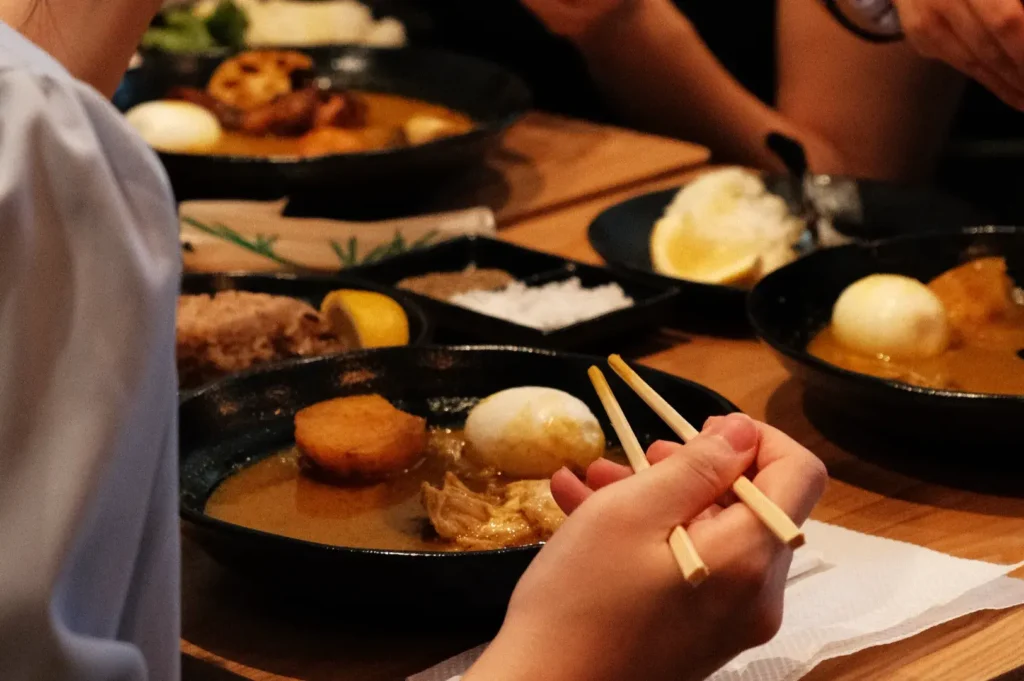
Ours is soup curry, our signature dish, built around chicken broth rather than coconut milk, which some other establishments use to add richness. We find that leaving coconut milk out keeps the broth clearer and allows the individual spices to remain distinct, rather than being softened by a heavier, creamier base. Toppings can vary too, and it is not unusual to find soup curry served with quail eggs alongside the usual vegetables and meat, adding a further layer of texture and nutritional benefits to an already varied bowl.
Turmeric and Anti Inflammatory Properties
Turmeric is usually the star of any discussion about the health benefits of curry, largely because of curcumin, its main active compound. Research suggests curcumin has notable anti inflammatory properties, and some studies have explored its potential role in easing symptoms associated with rheumatoid arthritis, though more research is still needed before firm conclusions can be drawn. What we do know is that turmeric has been used in Asian cooking for centuries, not only for flavour but for its warming, anti inflammatory benefits, and it remains one of the most recognisable ingredients in any curry powder blend.
Cumin, Coriander, Fenugreek Seeds and Digestion
Beyond turmeric, cumin and coriander bring their own supporting roles. Cumin has traditionally been associated with supporting digestion, while fenugreek seeds and mustard seeds, common in many spices used across Indian curries, are believed to aid the breakdown of fats and encourage a settled stomach. Curry leaves, when used, are said to reduce nausea in traditional cooking practices, which is one reason a warm, spiced broth has long been considered a comforting dish for anyone feeling under the weather. This is far removed from a typical rich, oily curry, where such delicate effects can be masked by heaviness.
Immune Health and Brain Health in Every Spoonful

A steaming bowl of spiced broth does more than warm you up on a cold evening. Ginger, a staple in our soup base, has long been valued for its potential benefits to immune health, and ginger’s warming properties are often credited with helping the body respond to the early signs of a cold. Garlic, another foundational ingredient, is frequently discussed in relation to immune health for similar reasons, with many home remedies across different cultures relying on it during flu season.
Then there is black pepper, added not just for its bite but because piperine, its active compound, is believed to enhance the absorption of curcumin from turmeric, effectively making the other spices work harder.
Some researchers have also looked into curry spices and brain health, exploring whether curcumin’s anti inflammatory properties might support brain cells over time, though this remains an area where more research is required before any definitive claims can be made. What is worth noting is that soup curry, by keeping its spices in a thin, absorbable broth rather than a heavy sauce, may offer a more efficient delivery method for these compounds than a typical rich curry gravy, making it an excellent choice for a nourishing Japanese lunch.
Heart Health, Cholesterol Levels and Blood Pressure
When people ask about the connection between curry and heart health, the answer usually comes back to a handful of key spices. Turmeric, garlic, and ginger have all been studied for their potential effects on cholesterol levels, with some research suggesting that regular consumption of curcumin may support healthier lipid profiles over time.
Garlic in particular has a long history of being linked to modest support for healthy blood pressure, and cumin has occasionally been explored for similar reasons. Some studies have gone further, looking at whether these spices might help address certain risk factors connected to heart disease, though this remains an evolving area of research rather than a settled conclusion.
Our broth is built to be light rather than laden with cream or excess oil, which naturally distinguishes it from many other rich curry preparations. Where a regular curry, especially traditional Japanese curry made with a roux based sauce, tends to be thicker and higher in fat, our soup base relies on the natural sweetness of ingredients like sweet potatoes, carrots, and pumpkin to build depth and body instead.
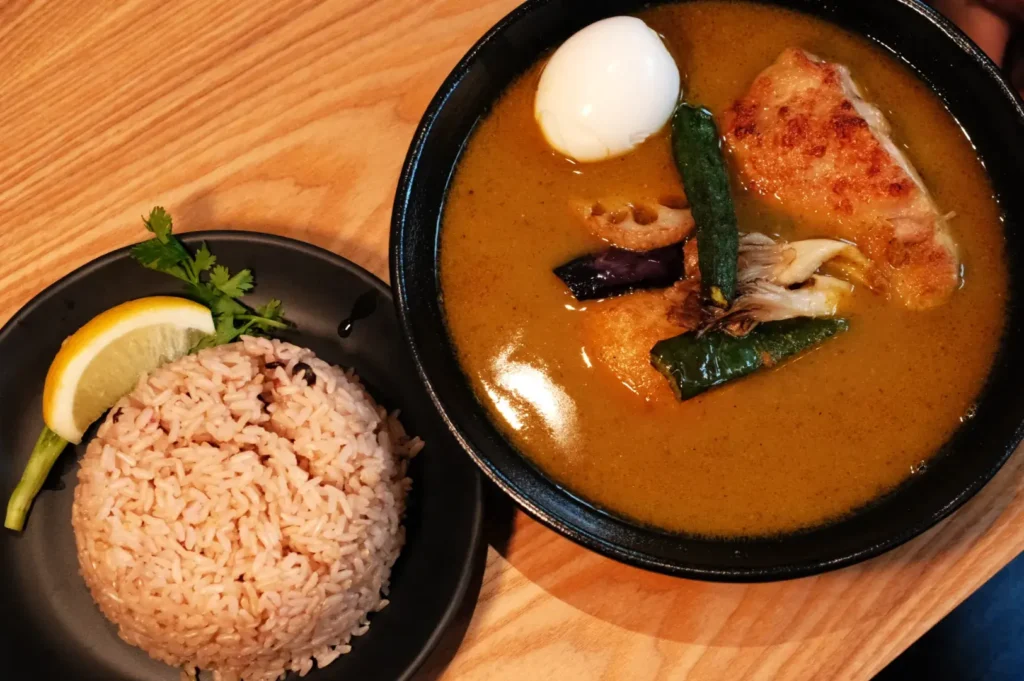
Combined with lean proteins such as chicken and vegetables like bell peppers, eggplant, mushrooms, and lotus root, the overall composition of the dish supports a lighter, broth forward approach to eating that some people specifically choose over heavier, sauce based curries when thinking about heart health.
Antioxidant Properties and Reducing Nausea
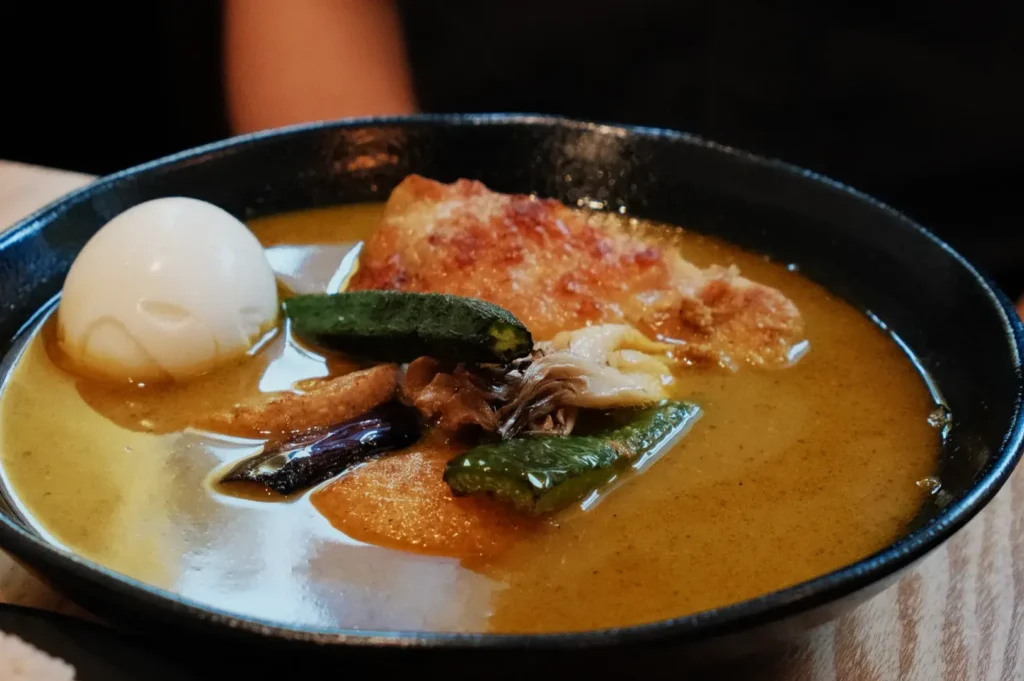
Many of the vegetables found in a well made bowl of soup curry, carrots, bell peppers, mushrooms, lotus root, and other vegetables besides, bring their own antioxidant properties to the table. When paired with the antioxidant compounds already present in turmeric and other spices, the overall dish becomes a genuinely varied source of plant based nutritional value, something that is harder to achieve with a single thick sauce covering rice and meat.
The soup format itself plays a role here too. Warm liquids have long been associated with soothing an upset stomach, and the gentle warmth of a spiced broth, combined with ingredients traditionally used to reduce nausea such as ginger and curry leaves, is part of why soup curry has earned its reputation as a soul food in Hokkaido. It is not simply comfort food in the emotional sense. It is a dish that has, over generations, been shaped around genuine restorative qualities.
Why You Should Eat Soup Curry Over Regular Curry
None of this means soup curry should be treated as medicine, and it would be misleading to suggest otherwise. But when comparing it directly to a typical rich, roux thickened curry, the differences are worth understanding. A lighter broth allows spices to remain more prominent and, arguably, more bioavailable.
Vegetables retain more of their individual character when deep fried using Japanese techniques like su-age, which flash fries without heavy batter, preserving their natural colours and nutrients rather than stewing them for hours in a dense sauce. Even the crispy chicken found in many soup curry bowls is typically prepared to stay tender inside, rather than being cooked down until it loses its texture entirely.
This is the approach we have taken since bringing Soup Curry by Ki-Setsu to Singapore, treating the broth not as a vehicle for the other ingredients but as the foundation of the entire dish. Every element, from the spice level to the choice of vegetables, is built around that base first.
A Different Way to Think About Curry

Soup curry health benefits do not come from a single miracle ingredient. They come from the cumulative effect of a spiced broth that keeps turmeric, ginger, garlic, cumin, and black pepper working together in a form the body can actually make use of, paired with vegetables and proteins that are cooked to preserve, rather than mask, their nutritional value. It is a different philosophy from regular curry, and once you understand why the broth matters, it becomes hard to look at a bowl of curry the same way again.