When people sit down to enjoy a bowl of curry, they often focus on spices or meat, but the true soul lies in its base. While many associate curry with creamy coconut milk, especially in Thai and Indian varieties, authentic Hokkaido soup curry uses carefully prepared chicken broth. This choice shapes flavor, nutrition, and comfort.
Coconut broth offers creamy richness, while chicken broth provides a clear, umami depth that lets vegetables and spices shine. Exploring this difference helps us appreciate why Hokkaido soup curry’s light, soul-warming nature is a beloved alternative to heavier milk-based curries across Asia.
The Clarity of Chicken Broth vs. The Density of Coconut Milk
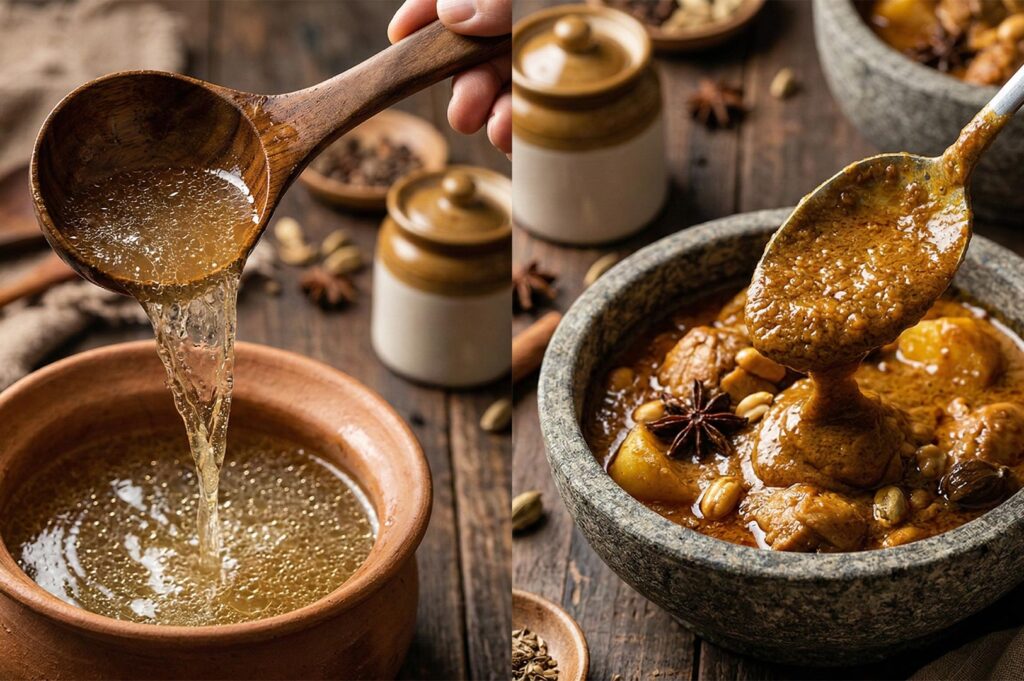
The most immediate difference when comparing these two bases is visual and textural clarity. A Thai curry, such as a vibrant green curry or a velvety massaman curry, relies on coconut milk to create a thick, opaque sauce. This liquid acts as a carrier for a complex curry paste, mellowing the sharp edges of chillies and herbs.
In contrast, the soup curry we prepare at our restaurant is built upon a transparent, light-bodied chicken stock. We begin by simmering chicken bones and sometimes a whole chicken for hours to extract every bit of natural essence. This process results in a pure chicken flavor that remains fluid rather than viscous. Because the base is water-based rather than fat-based, it carries the spices and curry powder directly to your taste buds without the insulating effect of coconut fats. This clarity is what makes soup curry a true soup rather than a gravy or a stew.
How Red Curry Paste and Green Curry Paste Interact with Different Bases
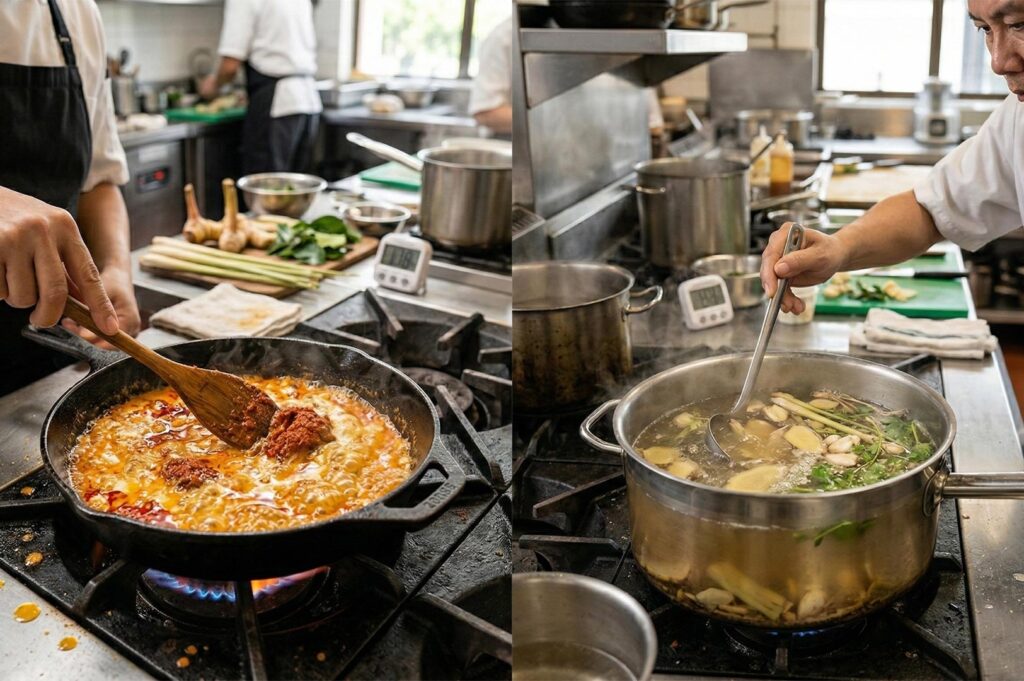
To understand the science of flavour, we must look at how a curry paste behaves in different environments. In a typical Thai food setting, a chef might fry a red curry paste or green curry paste in coconut cream until the oil separates. This technique is essential for releasing the fat-soluble aromatics in the paste.
The Role of Aromatics in Chicken Stock
When we develop our Japanese style soup curry, we do not use the heavy oil-separation method. Instead, the aromatics are infused directly into the chicken broth. Without the heavy sweetness of coconut, ingredients like garlic, ginger, and onions must be perfectly balanced. We use a fine mesh strainer to ensure our broth remains elegant and debris-free, focusing on a clean finish.
Comparison with Thai Ingredients
In a red curry, the coconut milk provides a cooling counterpoint to the heat. In a jungle curry (or gaeng pa), which is one of the few Thai curries that does not use coconut milk, the result is famously spicy and sharp. Soup curry finds a middle ground. It uses the savoury depth of a long-simmered chicken broth to provide the body that a jungle curry lacks, while maintaining a lighter profile than a yellow curry.
The Impact of Chicken Broth on Ingredient Integrity
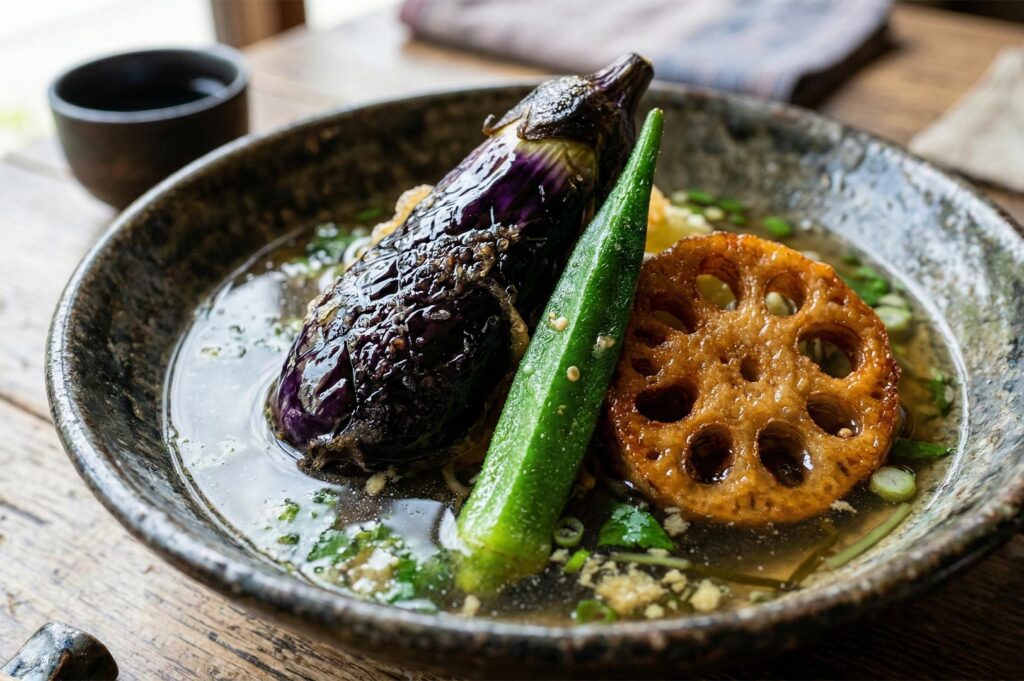
One of the reasons we are so passionate about our soup base is how it treats vegetables. In a coconut broth, the ingredients are often submerged and simmered until they take on the flavour of the sauce. While delicious, this can sometimes mask the natural sweetness of a fresh carrot or the earthiness of a lotus root.
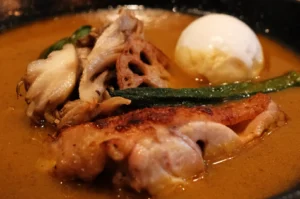
Because we use a chicken stock base, our vegetables remain the stars of the show. We use the Japanese su age technique, where we flash-fry items like bell peppers, eggplant, and potato until they are golden brown. When these are placed into the chicken broth, the light liquid seasons the exterior without turning the vegetable into a soft, coconut-heavy mass. You can taste the pure chicken flavor of the broth and then immediately transition to the distinct, crisp taste of a snap pea or okra.
For the health-conscious diner, the nutrition facts of your curry base are an important consideration. Coconut milk is undeniably delicious, but it is very high in saturated fat. While it provides a quick source of energy, a single bowl of coconut-based Thai curry can be quite heavy on the digestive system.
Comparing Fat Profiles
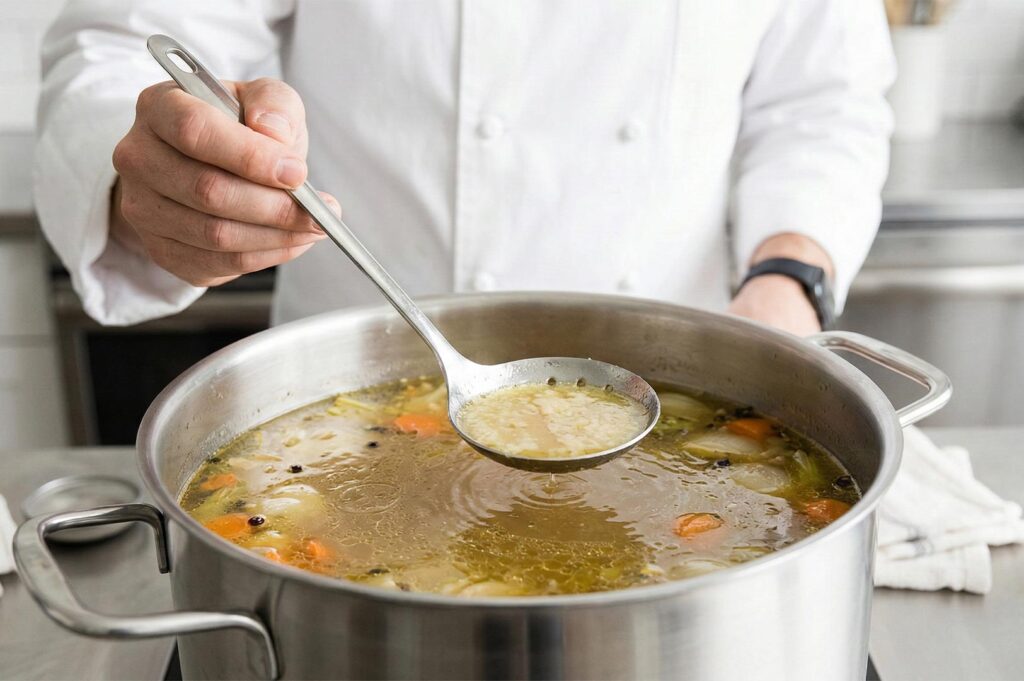
A well-prepared chicken broth offers a different nutritional profile. When we simmer chicken bones to create our base, we carefully skim the surface with a slotted spoon to remove excess fat. This leaves us with a liquid that is rich in minerals and collagen but significantly lower in saturated fat than coconut-based alternatives.
Coconut Milk: High in saturated fat, providing a creamy but calorie-dense experience.
Chicken Stock: Lower in calories, with a focus on protein-derived umami and minimal monounsaturated fat.
Vegetable Additions: By using fresh vegetables in a light broth, you retain more vitamin C and antioxidants compared to long-stewed methods.
By choosing a chicken broth base, we provide a meal that feels like soul food, filling and hearty, without the post-meal lethargy often associated with heavy creams or oils.
The Customary Metric of Spice and Seasoning
The way a chef seasons a dish depends entirely on the base liquid. In Thai restaurants, you will often find fish sauce, lime juice, and palm sugar used to create a salty-sour-sweet balance in a coconut broth. The coconut acts as the glue that holds these disparate flavours together.
In our kitchen, the seasoning of the chicken broth follows a different customary metric. We rely on high-quality soy sauce, a touch of tomato paste for acidity, and a precise blend of spices like cumin and coriander. Because we don’t have the sweetness of coconut milk to hide behind, the quality of our chicken and the precision of our simmer are paramount. If the broth is not perfectly clear and savoury, the entire dish loses its balance.
Building the Perfect Base: From Instant Pot to Heavy Bottomed Pot
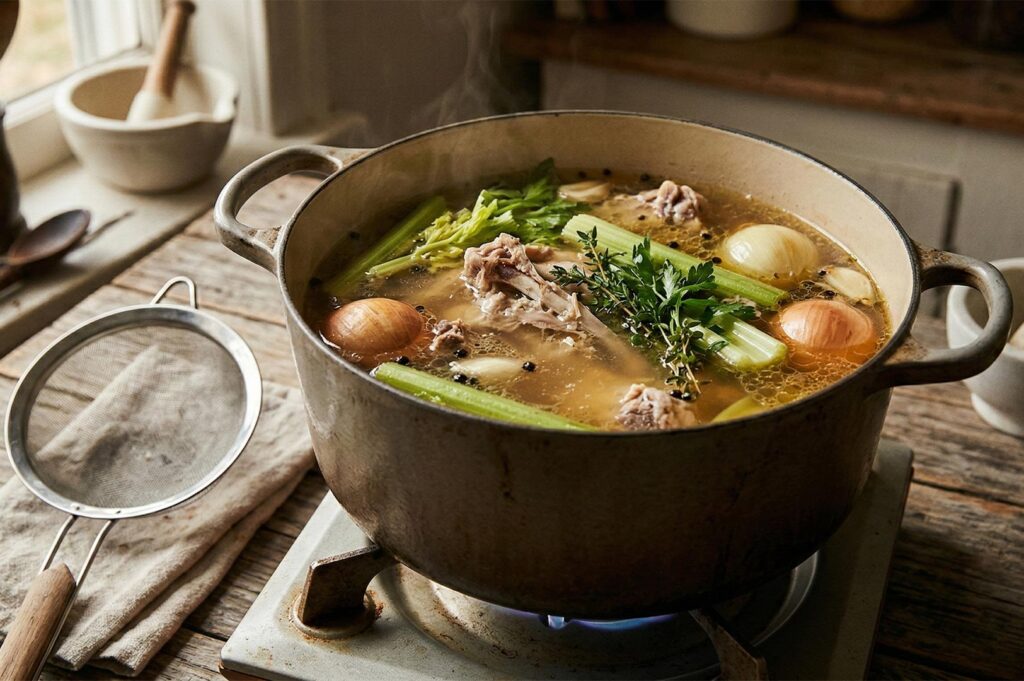
While many modern kitchens might reach for an Instant Pot to speed up the process, the most authentic way to create a deep chicken broth is through time and patience. We believe in the slow boil followed by a long, gentle simmer in a heavy bottomed pot.
Preparation: We start with cold water and high-quality chicken bones.
Aromatics: We add celery, onions, and garlic to build layers of flavour.
Refinement: After hours of cooking, we reduce heat and strain the liquid until it is shimmering and clear.
This method is vastly different from making a quick tom kha or tom kha kai, where the coconut milk is added toward the end to provide immediate body. Our process is about extraction and concentration, ensuring that every spoonful of soup carries the history of its preparation.
Herbs and Aromatics: Thai Curry vs. Japanese Soup Curry
The herbs used in these different curries also play a role in why the base matters. In a green curry, you will find Thai basil, makrut lime leaves (or kaffir lime leaves), and lemongrass. These fresh, citrusy notes are designed to cut through the fat of the coconut.
In our Hokkaido soup curry, we use a different aromatic palette. While we might incorporate lemongrass, we also use fresh thyme, bay leaf, and white pepper to align with the Japanese style of broth making. This creates a profile that is more reminiscent of a comforting roast chicken dinner, elevated by the warmth of curry powder. The absence of coconut milk means we don’t need as much acidity from lime leaves or lime juice to balance the bowl.
The Texture of the Meat: Tender Chicken Legs
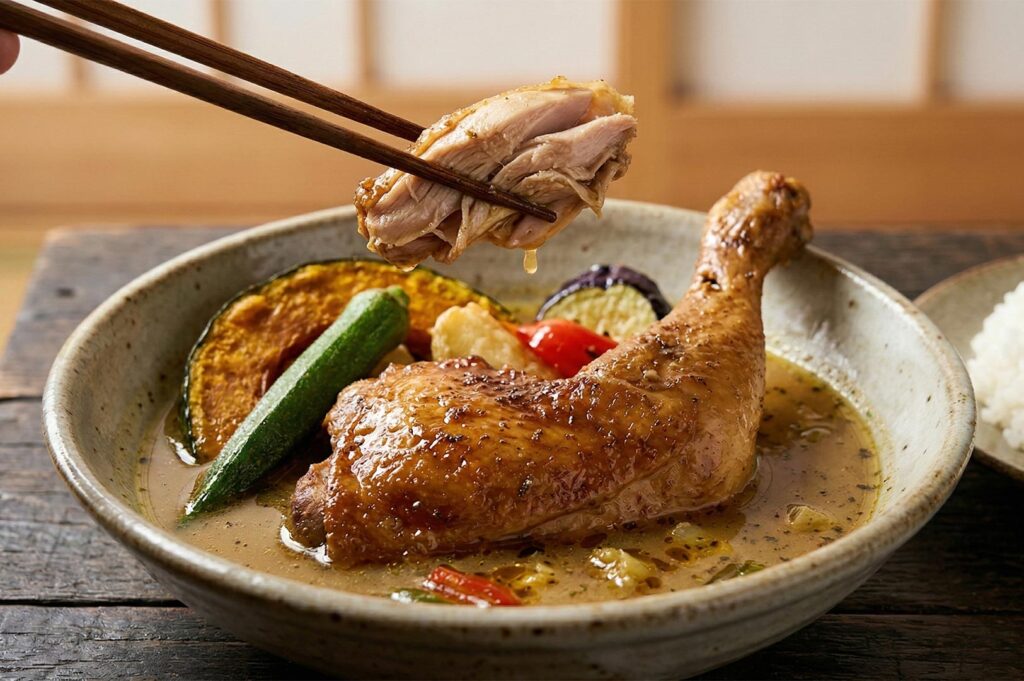
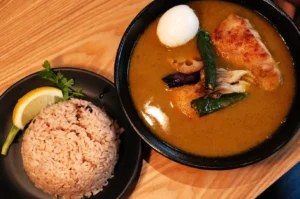
In many red curry or massaman curry dishes, the meat is cut into small pieces to ensure it cooks quickly in the thick sauce. At Soup Curry by Ki-Setsu, we prefer to serve a whole, tender chicken leg. Because the chicken broth is thin, it can penetrate deep into the meat during the final stages of cooking, keeping it incredibly moist.
Unlike a rotisserie chicken which is dry-cooked, our chicken is braised within its own essence. This reinforces the pure chicken flavor throughout the entire dish. When you eat soup curry, the experience of pulling the tender meat away from the bone and dipping it into the light curry soup is a ritual that coconut-based curries simply cannot replicate.
Why Soup Curry is the Ultimate Crowd Pleaser
One of the most common more comments we receive from our guests is how “clean” the meal feels. This is the ultimate victory of the chicken broth over coconut milk. While we love the occasional Thai curry, there is something uniquely restorative about a clear soup base.
It is a crowd pleaser because it appeals to everyone: from those seeking a healthy, low-fat lunch to those looking for the deep, spicy satisfaction of a traditional Japanese curry. By avoiding the heavy saturated fat of coconut, we allow the vibrant colors and natural textures of the fresh vegetables, like the purple eggplant and green okra, to define the meal.
The Soul of the Bowl
In the debate of Chicken Broth vs. Coconut Milk, there is no clear winner, only different purposes. Coconut milk offers creamy indulgence and tropical aroma, while the chicken broth in authentic Hokkaido soup curry delivers a clear, umami-rich flavor that highlights each ingredient.
At Soup Curry by Ki-Setsu, we honor traditional Hokkaido methods by using carefully strained chicken stock, creating a soul-warming dish without the heaviness of coconut broth.
Whether you prefer green curry, massaman curry, or something new, try experiencing how the base liquid changes everything. Notice the broth’s clarity and the brightness of the vegetables; you might find the lighter path the most flavorful.