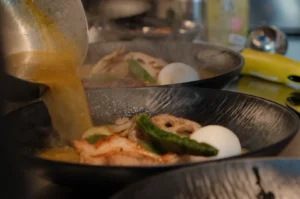
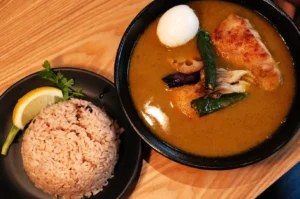
To the uninitiated, the term soup curry might sound like a redundancy. In the global culinary lexicon, curry is often synonymous with a thick, gravy-rich stew. However, step into the snowy streets of Sapporo, the capital city of Hokkaido, and you will find a soup dish that defies the viscous conventions of traditional Japanese curry.
Vibrant, aromatic, and structurally distinct, Hokkaido soup curry is a marvel of culinary engineering. It is a signature dish that has transitioned from a localized “soul food” to a national phenomenon. But the question remains: is soup curry actual curry, or is it a sophisticated broth masquerading under a spicy moniker? To understand this, one must peel back the layers of its aromatic broth, the precision of the Japanese su age technique, and the history of a city that dared to reinvent a staple.
The Genesis of a Soul Food: Exploring the Origins of Sapporo Soup Curry
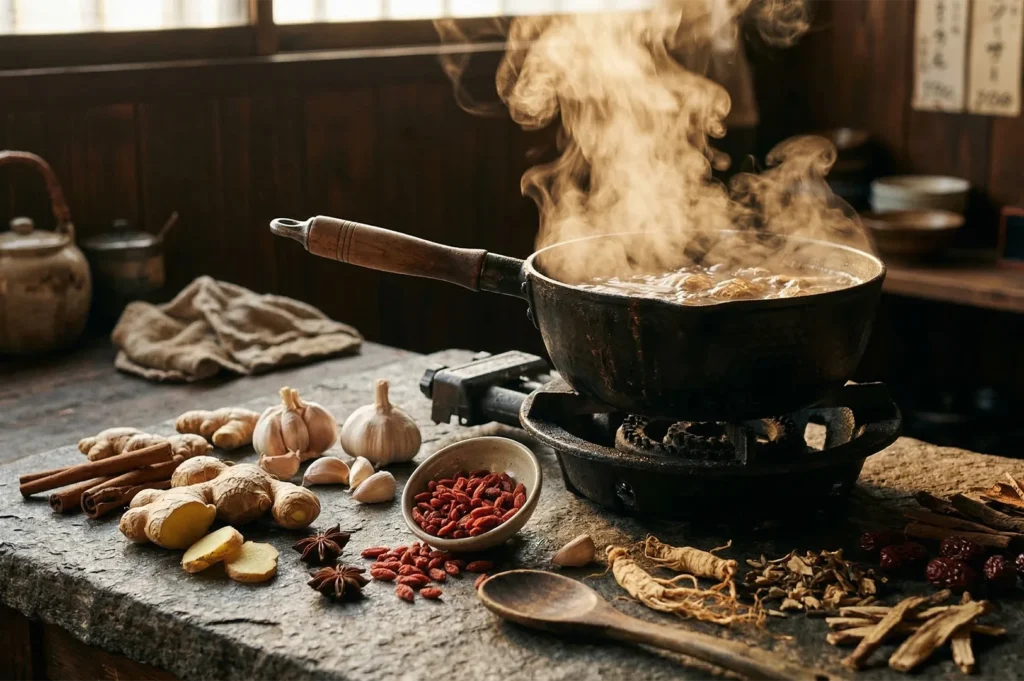
The lineage of authentic soup curry does not trace back to the British-influenced curry roux that defines typical Japanese curry. Instead, its roots are medicinal. In the 1970s, small eateries in Sapporo began experimenting with “medicinal soups” inspired by Chinese and Southeast Asian herbal traditions.
The original soup curry was far thinner than the flour-thickened sauces found elsewhere in Japan. It was designed as a restorative meal, utilizing chicken bones, pork bones, and a medley of medicinal herbs.
The Structural Divergence: Soup Curry vs. Traditional Curry
Feature | Traditional Japanese Curry | Hokkaido Soup Curry |
|---|---|---|
Consistency | Thick, velvety, roux-based | Thin, clarity-focused aromatic broth |
Vegetables | Simmered until soft/integrated | Deep fried or flash-fried separately |
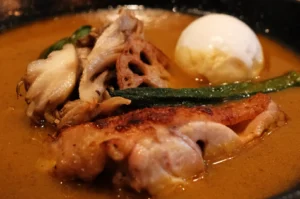
Protein | Bite-sized chunks stewed in sauce | Often a whole, tender chicken leg |
Rice Serving | Served in the same bowl or plate | Served as a side of steamed rice |
Common Myths About Soup Curry Being an Actual Curry
Given the unique nature of soup curry, many people wonder, “Is soup curry actual curry?” This question has led to several myths and misconceptions about the dish. Let’s address some of the most common ones to clarify what soup curry truly is.
Many people believe that soup curry’s thin, broth-like consistency means it cannot be considered true curry. However, curry is defined more by its use of spices and flavor profile than by thickness. Soup curry features a lighter, aromatic broth infused with traditional curry spices such as garam masala, coriander, and curry powder. This intentional thinness offers a refreshing alternative to the thick, roux-based traditional Japanese curry.
Although both dishes share the name “curry,” soup curry and traditional Japanese curry differ significantly. Traditional Japanese curry is thick, sweet, and roux-based, with all the ingredients simmered together to create a unified flavor. In contrast, soup curry presents a clear, spiced soup base with ingredients cooked separately to preserve their individual textures and flavors.
The Anatomy of the Broth: The Science of a Spicy Soup Dish
The heart of the soup curry lies in its base. Unlike a standard stew where ingredients are boiled together, creating a unified flavor, this dish is a study in layered complexity.
The Foundation
A heavy bottomed pot is essential for the long extraction process. The broth typically begins with a combination of chicken bones, pork bones, and an array of aromatics like ginger and garlic. To provide body without the heaviness of flour, many soup curry restaurants utilize a tomato paste or caramelized onion base. This adds a hint of natural sweetness and acidity that balances the heat.
The Spice Profile
For spice lovers, the allure is the customizable spice levels. Rather than a pre-mixed curry powder, a sophisticated broth utilizes a bespoke blend of:
Garam masala: For warmth and depth.
Coriander: For a citrusy, floral lift.
Cumin and turmeric: For the earthy “curry” backbone.
Fresh chillies: To dial the heat from a mild simmer to an intense burn based on personal taste.
Mastering Texture: The Japanese Su Age Technique and Fresh Vegetables
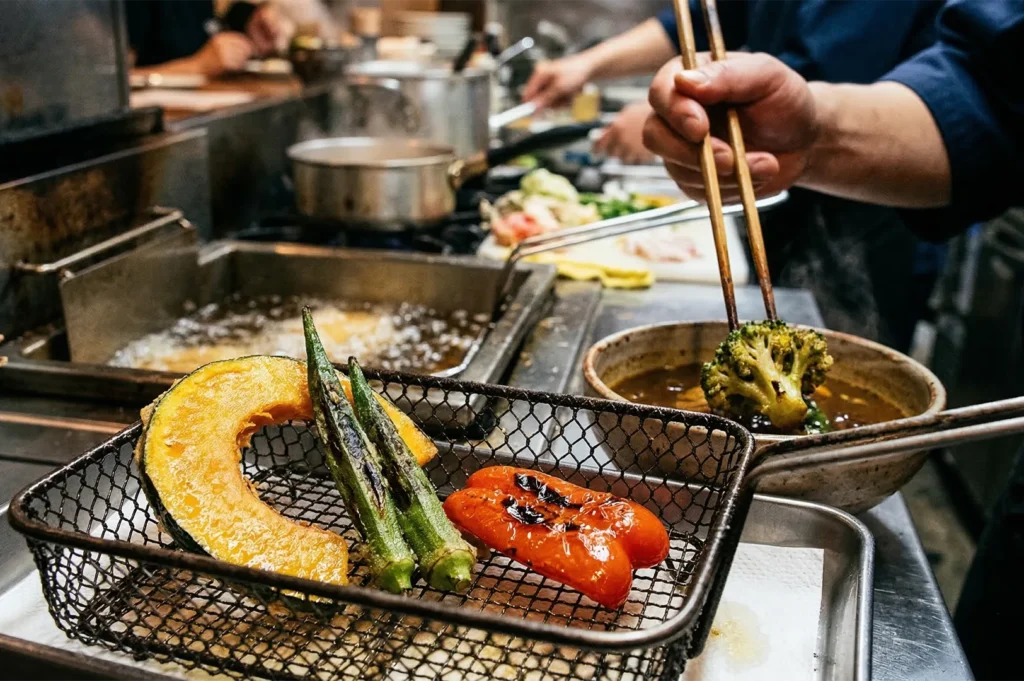
What visually distinguishes this dish from any other is the presentation of fresh vegetables. In a typical Japanese curry, vegetables like carrots and potato are simmered until they nearly dissolve. In authentic soup curry, the vegetables are the stars, treated with the Japanese su age technique.
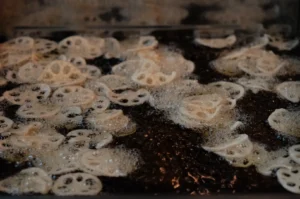
Su age refers to deep fried ingredients without any batter or flour coating. This process flash-cooks the fresh ingredients, preserving their vibrant colors and intensifying their natural sweetness.
The Essential Vegetable Medley
Root vegetables: Lotus root, potato, and carrots are par-boiled and then deep fried to create a crisp exterior and creamy interior.
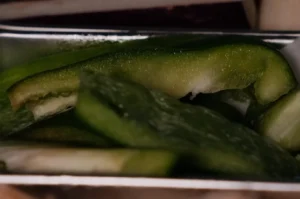
The “vibrants”: Bell peppers, eggplant, and broccoli are subjected to flash frying. This ensures the broccoli florets soak up the soup like a sponge while remaining crisp.
The accents: Okra, baby corn, mushrooms, and pumpkin add varying textures, from mucilaginous to crunchy.
To ensure the dish isn’t greasy, the vegetables are briefly rested on a wire rack or paper towels to remove excess oil before being arranged artfully atop the broth.
How to Eat Soup Curry: Navigating Your First Soup Curry Experience
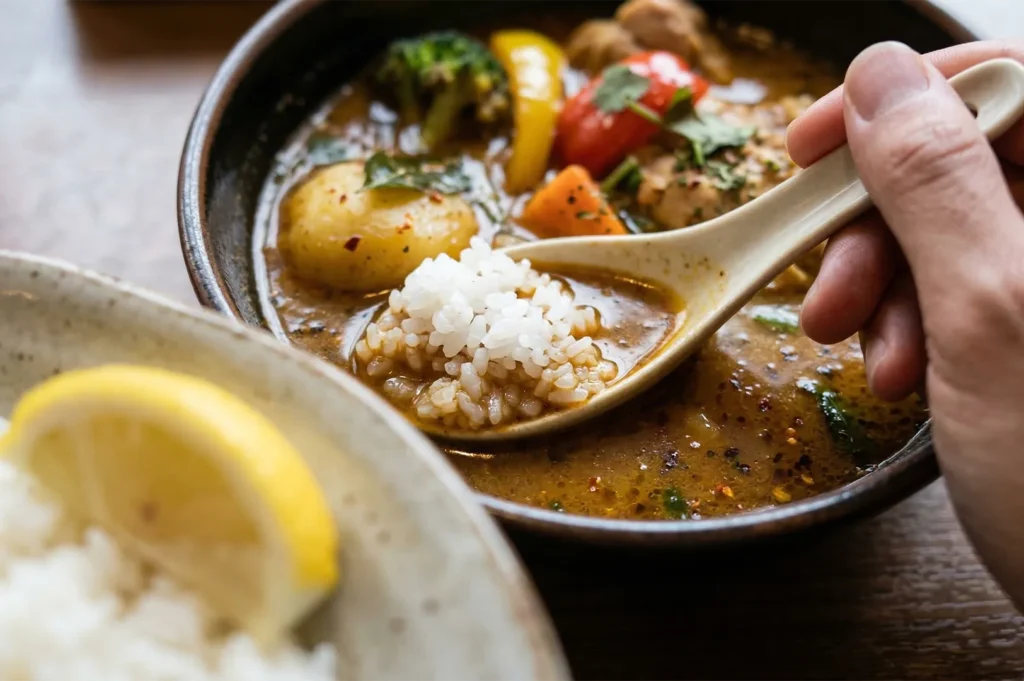
For those approaching their first soup curry experience, the logistics of the meal can be confusing. Because the rice and soup are served in separate vessels, there is a specific etiquette to eat soup curry effectively:
The dip: Take a spoonful of steamed rice, submerge it briefly into the curry, and eat it. This prevents the rice from becoming overly mushy.
The protein: The meat, often a whole chicken leg, should be so tender that it falls off the bone with a light touch of a spoon or chopsticks.
The squeeze: Many restaurants provide a wedge of lemon with the rice. Squeezing this over the rice not into the soup provides a bright contrast to the savory pork or chicken-based broth.
The Pursuit of Purity at Soup Curry by Ki-Setsu
Ultimately, soup curry is not merely a soup masquerading as a curry; it is a sophisticated evolution of the genre that replaces heavy thickeners with the clarity of a spiced, medicinal broth. By uncoupling the preparation of the vibrant suage vegetables from the long-simmered base, the dish achieves a structural complexity that traditional roux-based curries cannot match. It is a legitimate and masterful reinvention of a global staple, proving that the essence of curry lies in its aromatic depth rather than its viscosity.
Our kitchen remains dedicated to these Hokkaido traditions. By sourcing the finest seasonal ingredients, we create a balance of tender proteins and crisp textures that honor the soul of northern Japanese cuisine. We invite you to experience how Soup Curry by Ki-Setsu transforms this regional staple into a refined and memorable dining experience.