There is a particular kind of hunger that sends people searching for ramen. It is not simply hunger for noodles. It is a craving for something warm, something rich, something that feels like it is looking after you from the inside out.
The trouble is that ramen has become such a familiar shorthand for Japanese comfort food that many diners reach for it automatically. They rarely pause to ask what they are actually craving underneath.
More often than not, what people want is warmth, depth of flavour, and a sense of being nourished rather than merely fed. That description fits soup curry just as well, and in many situations, better.
This article looks at the specific moments when a ramen craving is really a soup curry craving in disguise.
The Craving Beneath the Craving
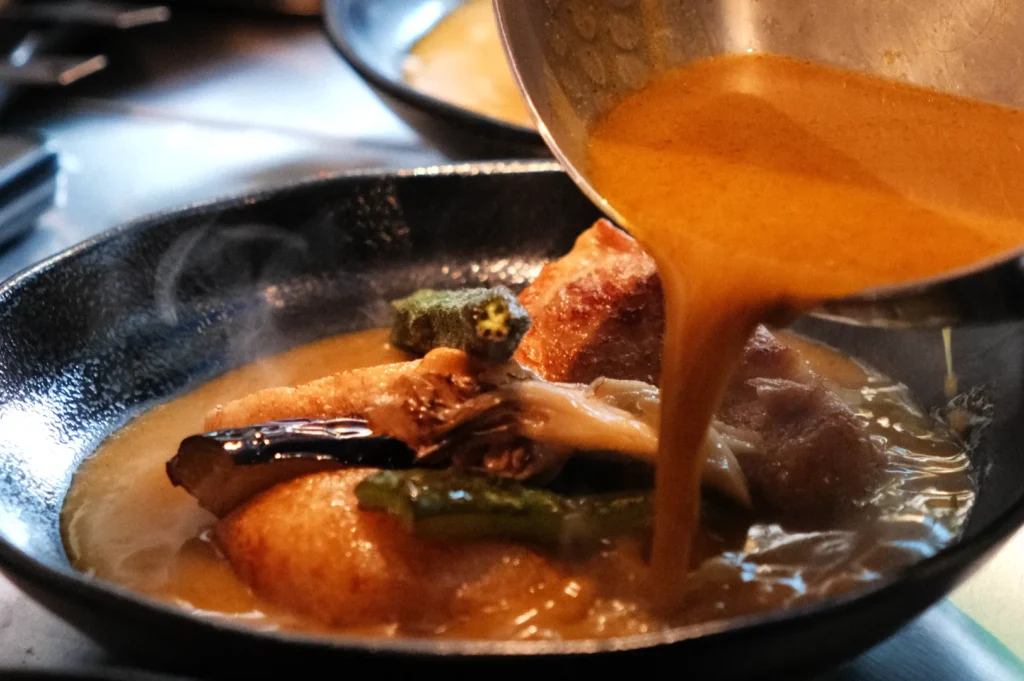
When someone says they want ramen, they are rarely thinking about the noodles first. They are thinking about the broth. The long simmer, the richness, the sense that a bowl has been tended to for hours before it reaches the table.
Soup curry answers that same instinct from a different direction. Our broth begins with a carefully built chicken stock, layered with a specific ratio of curry spices and aromatics rather than a single blended paste.
The result is lighter in texture than a typical curry gravy, yet every bit as considered as a good ramen broth. Where ramen broth tends to coat and cling, soup curry broth is designed to be sipped, almost like a restorative soup carrying the warmth of curry spice.
Depth Without Heaviness
Ramen broths, particularly the richer styles, can sit heavily after a meal. Soup curry is built to avoid that. The spice blend adds perceived depth and warmth, so your palate reads it as indulgent. Yet the actual composition remains far lighter on the stomach. For anyone who has finished ramen feeling satisfied but slightly weighed down, this is where soup curry quietly wins.
When Rice Suits the Moment Better Than Noodles
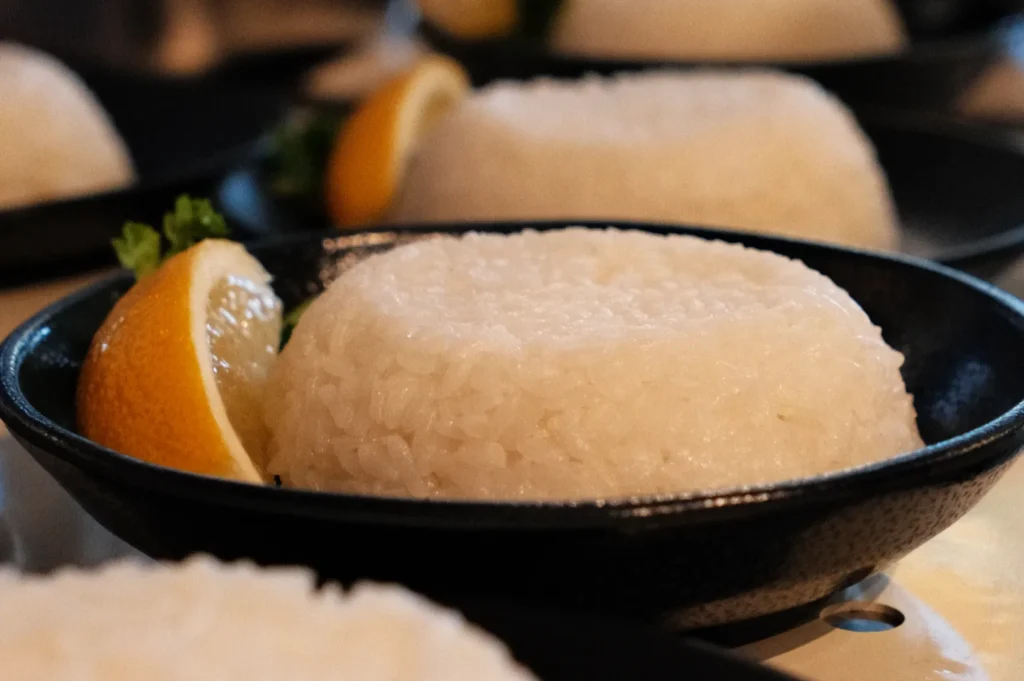
Noodles are wonderful, but they are not always what a meal calls for. Rice is more forgiving. It sits well with a wider range of spice levels, and it does not need to be eaten quickly before it overcooks in hot broth.
Soup curry is served with steamed rice on the side rather than mixed into the broth. This changes the pacing of the meal entirely, letting you control how much rice enters each spoonful.
This is a small detail, but it matters for anyone who finds ramen’s noodle to broth ratio a little inflexible. If you like to slow down and build each mouthful deliberately, rice offers that control in a way noodles rarely do.
For Those Who Want Vegetables as Heroes, Not Garnish
Ramen toppings tend to be supporting characters: a slice of chashu, a soft egg, perhaps a few slivers of spring onion. Vegetables, when they appear, are usually an afterthought.
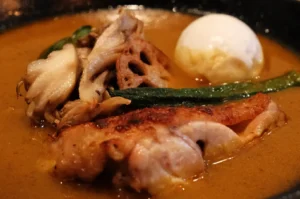
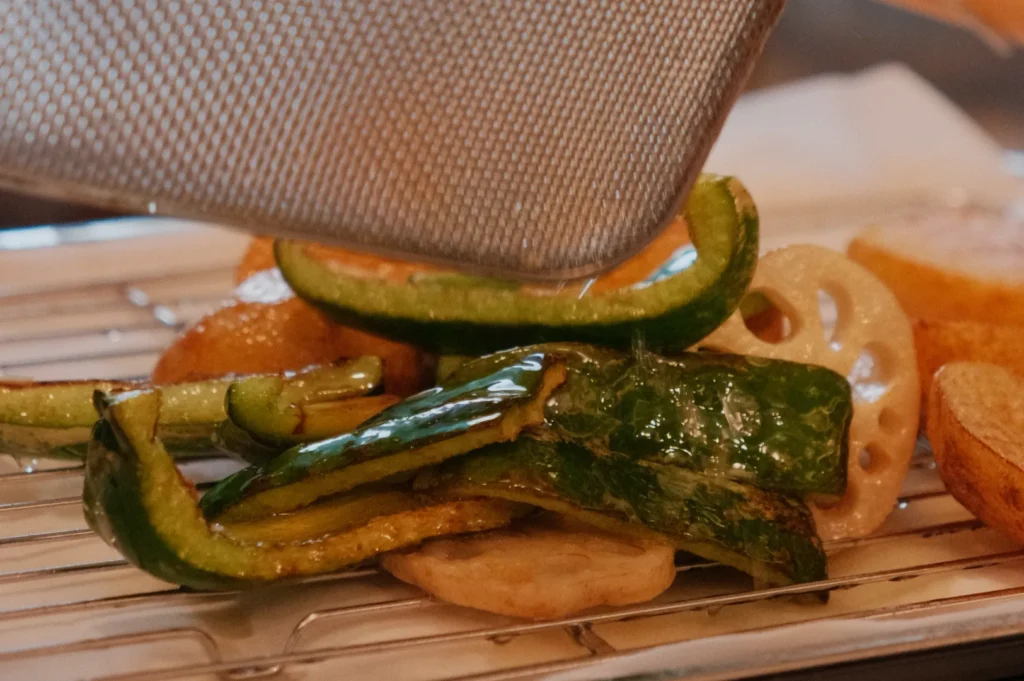
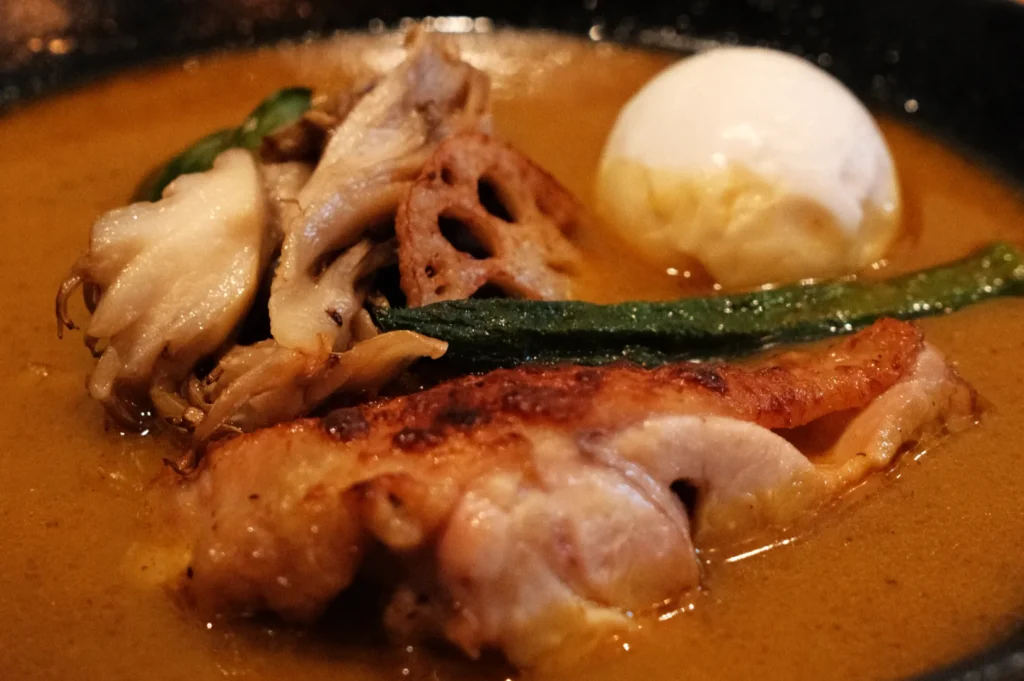
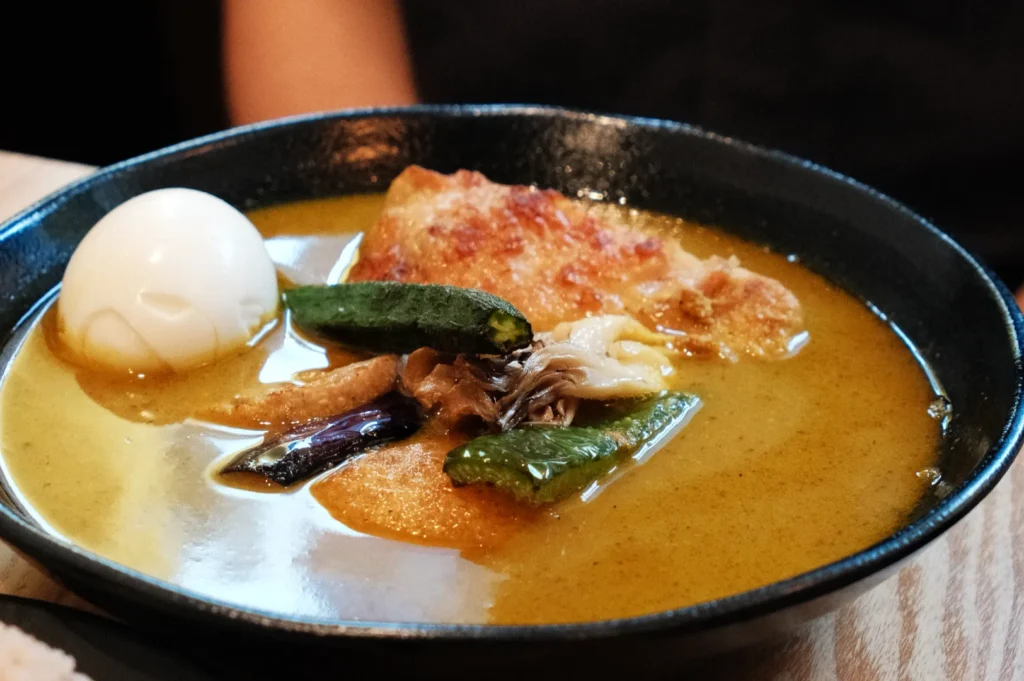
Soup curry flips that hierarchy entirely. Large, vividly coloured vegetables such as bell pepper, lotus root, aubergine, and potato are cut using traditional Japanese techniques and deep fried using a method known as su age, preserving their natural colour and texture.
These are not garnish. They are substantial, satisfying components that give the bowl real variety, from the crisp edge of a fried lotus root slice to the soft centre of a well cooked potato. If your ramen craving is secretly a craving for more than noodles and a boiled egg, this is where soup curry surprises most.
A Bowl Built for Variety
Because the vegetables and chicken sit alongside the broth rather than fully submerged within it, each element keeps its own character. You get contrast in every spoonful rather than a uniformly soft, broth soaked bite.
For diners who pick through ramen toppings looking for something with more bite, soup curry offers that texture as standard.
For Spice Lovers Seeking Customisation
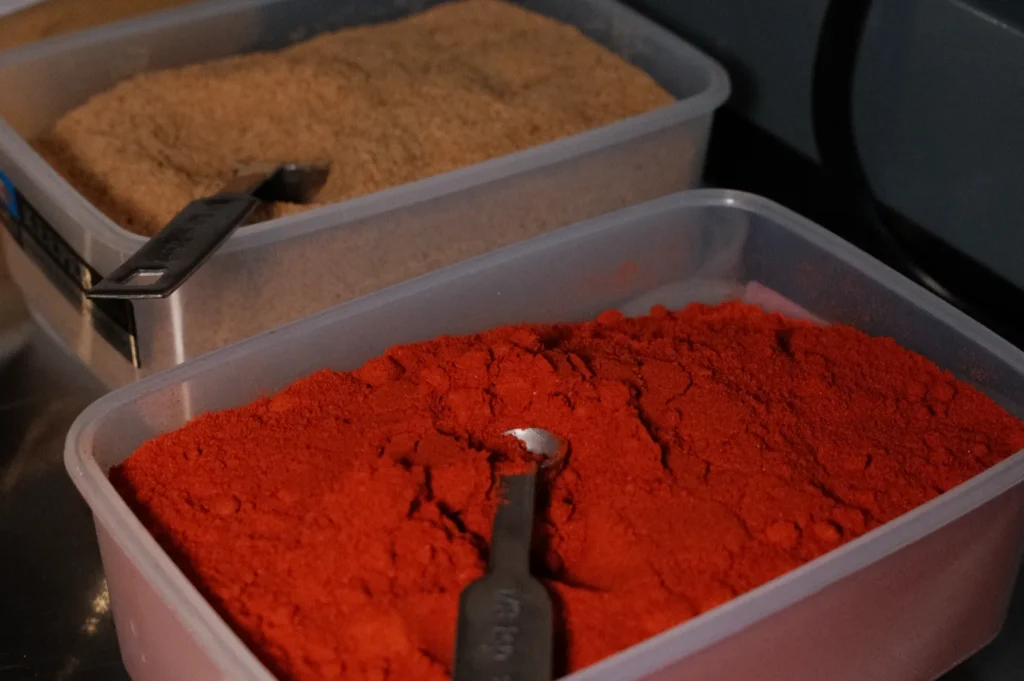
Ramen spice adjustments are usually limited to a chilli oil drizzle or a request for extra heat, applied on top of an otherwise fixed broth. Soup curry, rooted in Sapporo’s original cafe culture, was built around customisation from the outset.
Spice level is treated as a genuine choice rather than an add on, ranging from gentle and approachable through to properly fiery for those who want it. This matters for a specific craving: heat that actually builds rather than a single sharp note sitting on the surface of a bowl.
Because the spice is blended into the broth itself rather than added afterwards, the heat unfolds gradually across the meal. If a ramen craving is really a craving for an escalating spice experience, soup curry was designed with exactly that in mind.
The Lighter, More Nourishing Alternative
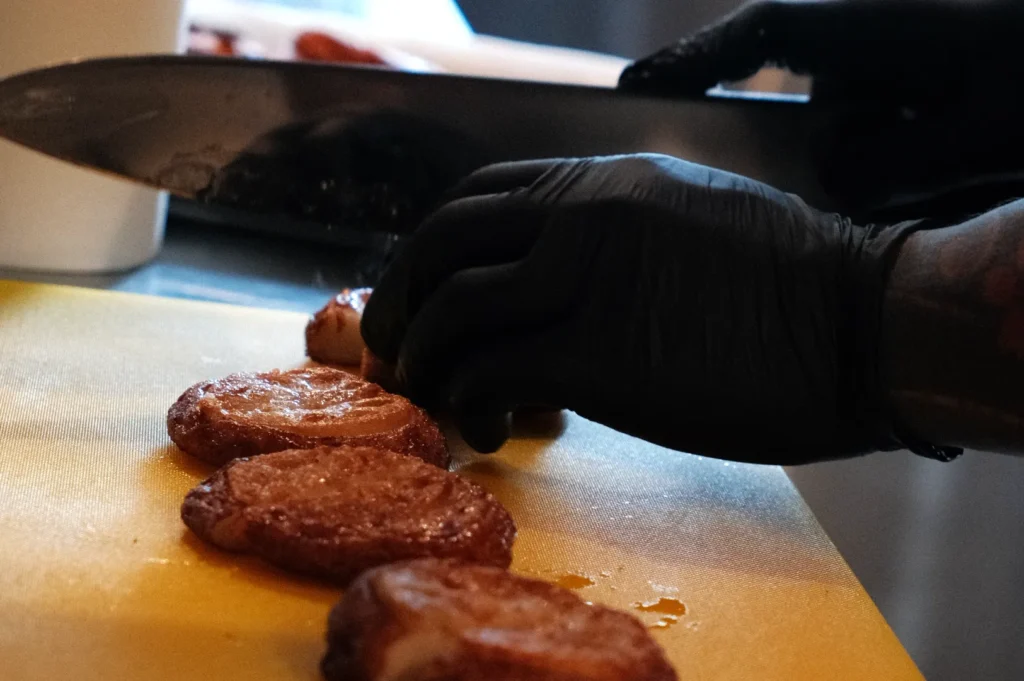
There is a common misconception that curry, by nature, must be heavy. Soup curry challenges that assumption directly. It was originally created in Sapporo as something closer to medicine than indulgence.
It was designed as a nutrient dense meal to help residents cope with brutally cold winters without leaving them sluggish afterwards. That soul food origin still shapes how the dish is approached today.
The broth is deliberately kept lighter than a Western style curry sauce, closer in weight to a soup, while still carrying real depth from its spice blend. For anyone who wants comfort without the heaviness that can follow a rich ramen broth, this is precisely the gap soup curry fills.
When the Evening Calls for More Than a Bowl
Ramen is typically a solo, quick affair: a counter seat, a fast meal, and you are on your way. But not every evening craving is about speed. Sometimes what you want is a slower evening, shared plates, and conversation that lingers.
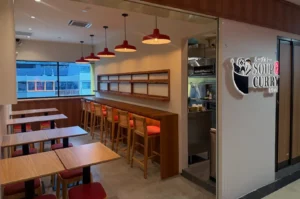
This is where the dual nature of an authentic soup curry restaurant becomes relevant. During the day, our restaurant serves the same nourishing bowls suited to a quick, wholesome midday meal.
From six in the evening onwards, the space shifts into a cosy izakaya setting, with Japanese small plates and drinks served alongside the signature soup curry. For anyone whose ramen craving is really a craving for a relaxed evening rather than a quick refuel, this matters.
As Singapore’s first restaurant dedicated to authentic Hokkaido style soup curry, Soup Curry by Ki-Setsu was built around this idea. A bowl of soup curry can serve a quick lunchtime craving just as well as it can anchor a longer, unhurried evening.
Recognising the Craving for What It Is
The next time a ramen craving strikes, it is worth pausing to ask what is actually being craved. Is it noodles specifically, or is it warmth, depth, vegetables with real presence, and spice that builds rather than sits flat?
For a great many diners, it turns out to be the latter, and that craving has a name. It is soup curry.
Choosing soup curry over ramen is not a compromise. It is recognising that the comfort you were after was never really about the noodles. It was about a bowl built with care, filled with vegetables that still taste like themselves, and warmed through with a spice blend that unfolds slowly rather than all at once.