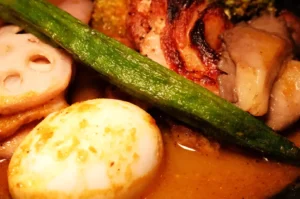
Order katsu curry and you know, before the plate arrives, roughly what to expect. Order soup curry for the first time and you genuinely do not. The bowl that appears is brighter, lighter, and more alive than anticipated. The rice sits to the side. The broth shimmers. Something here operates by different rules entirely. These two dishes share a name and a spice-forward soul, yet they represent genuinely different ideas about what a bowl of curry should do for you, built on different logic, different textures, and a different emotional register altogether.
The Architecture of Katsu Curry
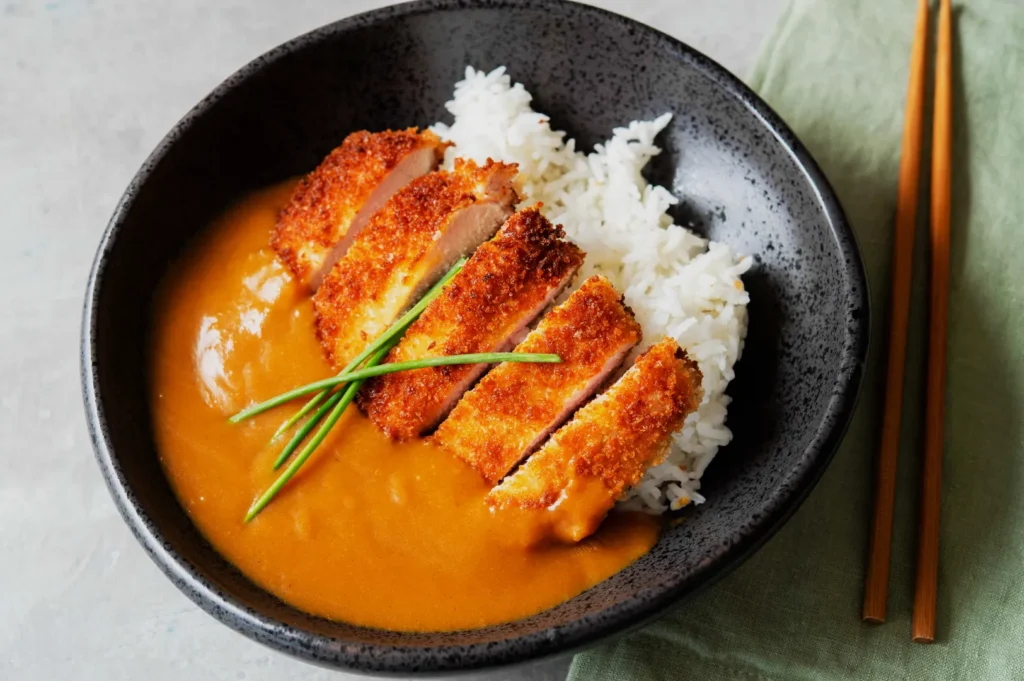
Katsu curry is, at its core, a dish of contrasts held together by proximity. A golden, panko-crusted cutlet, usually pork or chicken, sits alongside a thick, glossy curry sauce poured over steamed rice. The sauce clings. It coats. It is sweet, deeply savoury, and built on a roux that gives it weight and body. The experience is satisfying in a particular way: it is filling, decisive, and complete in a single forkful.
The pleasure of katsu curry is largely textural. The crunch of the breaded cutlet against the soft rice, the thick sauce binding everything together. It rewards speed. You eat it hot and quickly, because the crunch is the point, and the crunch waits for no one.
Comfort Through Density
What katsu curry offers is comfort through consolidation. Everything on the plate is working together to produce a single, unified effect. The sauce does not ask you to slow down. It does not invite you to investigate individual ingredients. It wraps everything in a warm, consistent embrace and delivers satisfaction efficiently.
This is not a criticism. That efficiency is precisely what makes katsu curry beloved across Japan and far beyond. It is the curry of lunch breaks and busy evenings, of hunger met with directness and warmth.
The Philosophy Behind Soup Curry
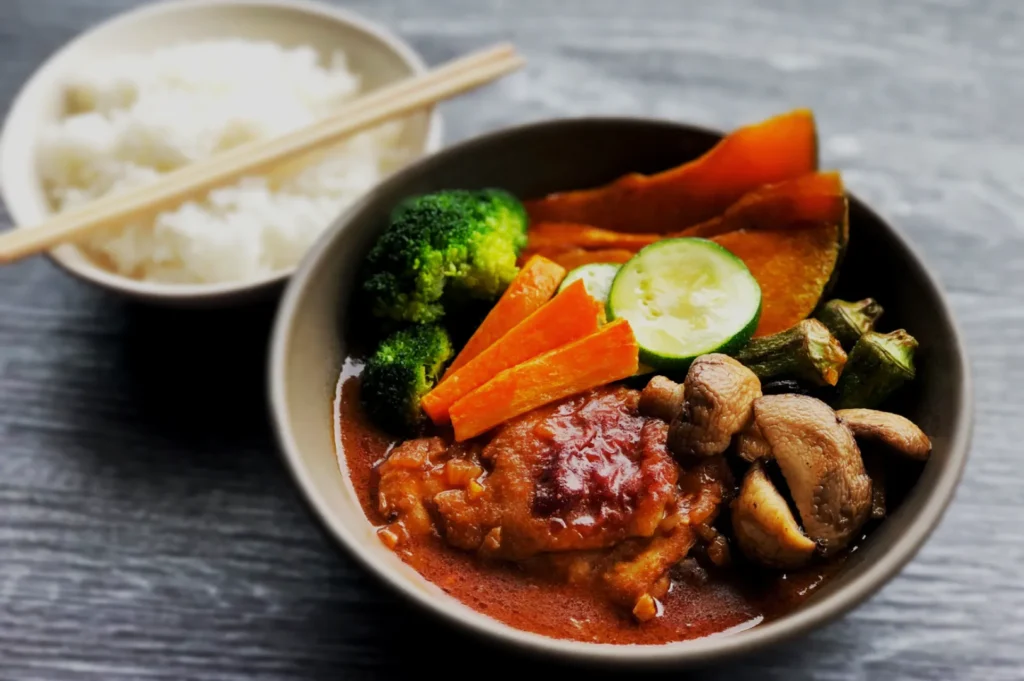
Authentic soup curry begins from an entirely different premise. Born in Sapporo, the northern capital of Hokkaido, it asks the question that katsu curry never needed to ask: what if the broth itself were the centrepiece?
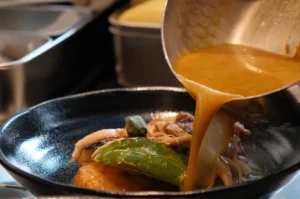
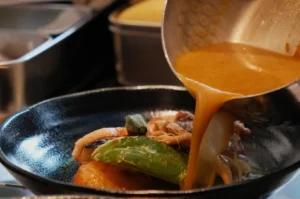
Where katsu curry sauce is thick and enveloping, soup curry is light and luminous. The base, built from chicken broth, aromatics, curry powder, garam masala, and tomato paste, is a liquid you could drink on its own and find deeply satisfying. It is not trying to coat or consolidate. It is trying to illuminate.
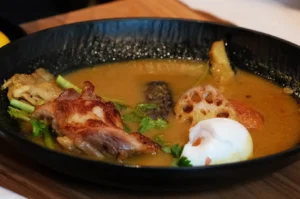
This changes everything about how you eat. In soup curry, the rice arrives on the side, not submerged. You dip, you sip, you compose each mouthful deliberately. The dish invites you to slow down, to notice. You are not eating at the curry. You are eating with it.
Vegetables as Characters, Not Accompaniments
One of the most telling differences lies in how each dish treats vegetables. In katsu curry, vegetables are often cooked into the sauce or served as a quiet side note, their individuality absorbed into the whole. In soup curry, each vegetable is a presence.
We prepare our vegetables using the Japanese su-age technique, a method of flash-frying without batter that preserves the vibrant colour and natural flavour of each piece. Bell pepper, lotus root, aubergine, potato, okra, pumpkin, carrot: each one arrives in the bowl with its own texture and character intact. The soup curry approach insists that a bell pepper should taste like a bell pepper, not like curry sauce with memory of bell pepper.
This is not a small distinction. It reflects a philosophy in which the curry soup is a stage, not a costume. The ingredients perform. They are not absorbed.
Spice as Dialogue, Not Declaration
Katsu curry’s spice profile tends toward the declarative. The sauce speaks first and loudly, and everything else follows its lead. This is part of its appeal: you know exactly what you are getting, and you get a lot of it.
Soup curry spice works differently. Because the broth is lighter, the spices exist in conversation with the other ingredients rather than dominating them. A sip of the soup might reveal warmth from the curry powder, then a herbaceous note from garam masala, then the gentle sweetness of caramelised onion and tomato. The spice is present and generous, but it is generous in the way of a good host: it makes room for everything else.
At our restaurant, the broth is built slowly, starting with onions, garlic, and ginger caramelised in a heavy-bottomed pot until the sugars develop and the raw edge softens. This process cannot be rushed, and it is not meant to be. The resulting depth is what separates an authentic soup curry from a mere thin curry soup.
Two Answers to the Same Question
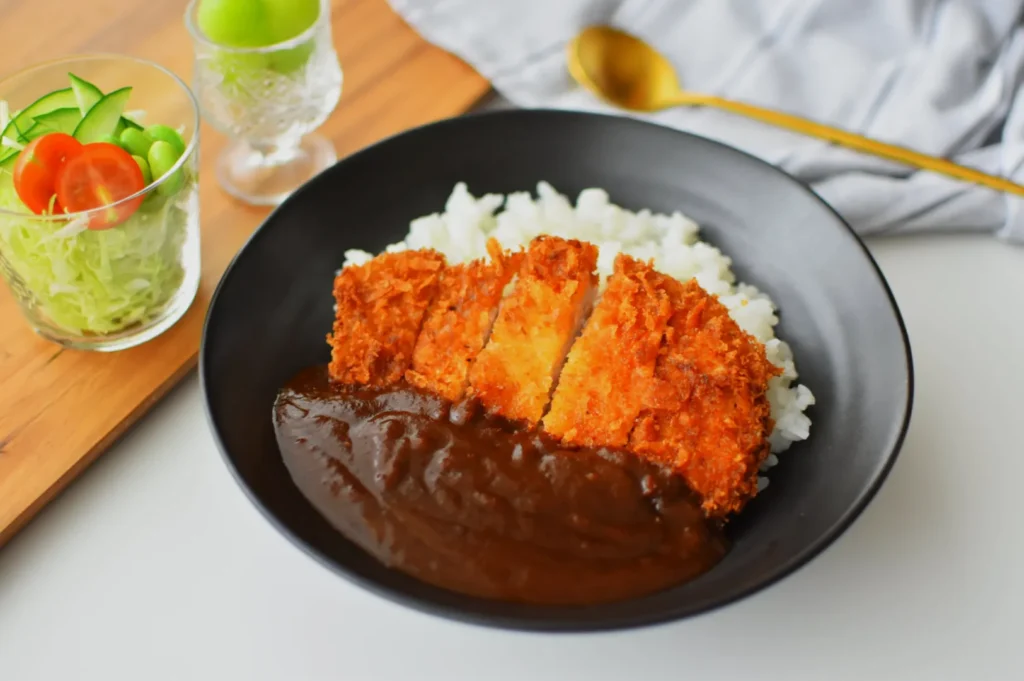
Both katsu curry and soup curry are answering the same fundamental question: how do we make someone feel warm, nourished, and cared for through food? The answers they arrive at simply reveal how many different paths lead to genuine comfort.
Katsu curry says: give them something substantial, satisfying, and certain. Wrap the experience in a thick sauce and let the crunch provide the joy.
Soup curry says: give them something that requires their attention. Let the broth carry complexity, let each vegetable speak for itself, let the meal unfold rather than arrive all at once.
Neither answer is wrong. But they are, in the deepest sense, different philosophies.
Why It Matters to Experience Both
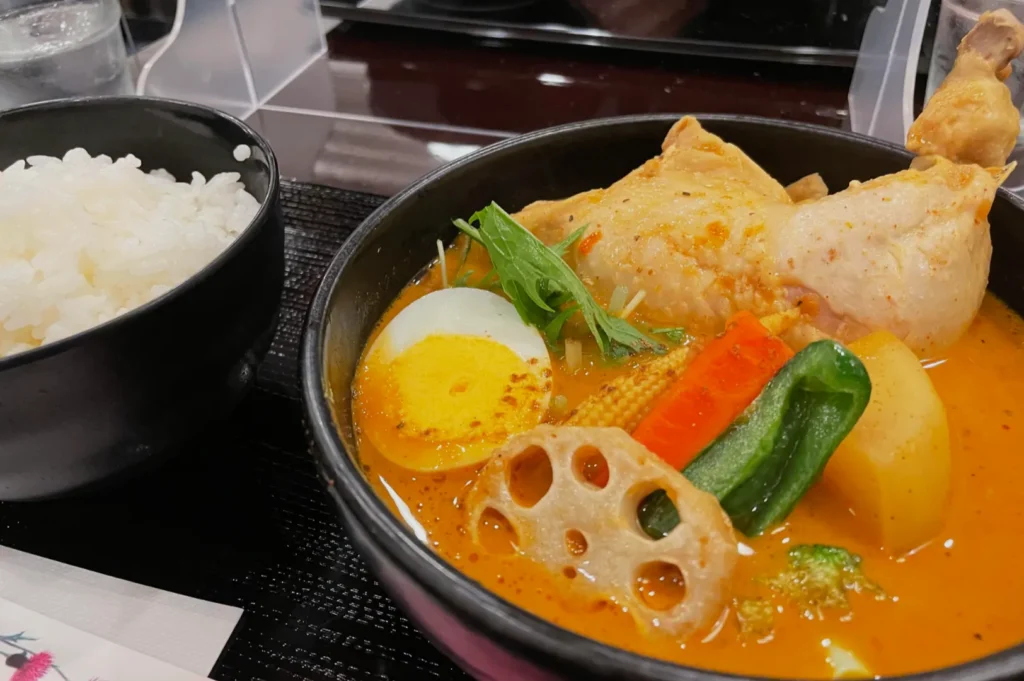
If you have spent your life in the company of katsu curry, soup curry will feel like a revelation, not because it is better, but because it is doing something you did not know curry could do. It feels lighter on the body and richer in the bowl. It rewards curiosity. It makes you a more active participant in your own meal.
Soup Curry by Ki-Setsu exists precisely to bring this philosophy to Singapore, to offer a version of comfort that Hokkaido has understood for decades and that this city is only now beginning to discover. Our team believes that knowing both traditions makes you a more complete eater, and that the contrast between them illuminates what is remarkable about each.
Katsu curry and soup curry are not rivals. They are two philosophies of the same warm impulse. But understanding the difference between them means understanding something true about the many ways food can speak to us, and about how much we might still be missing.