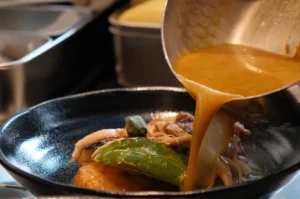
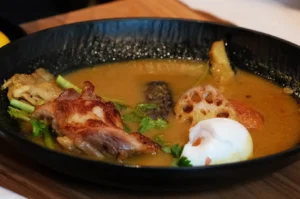
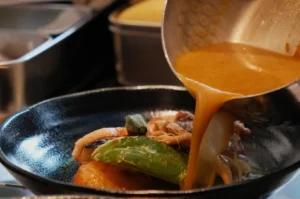
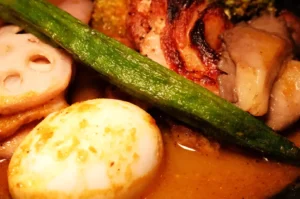
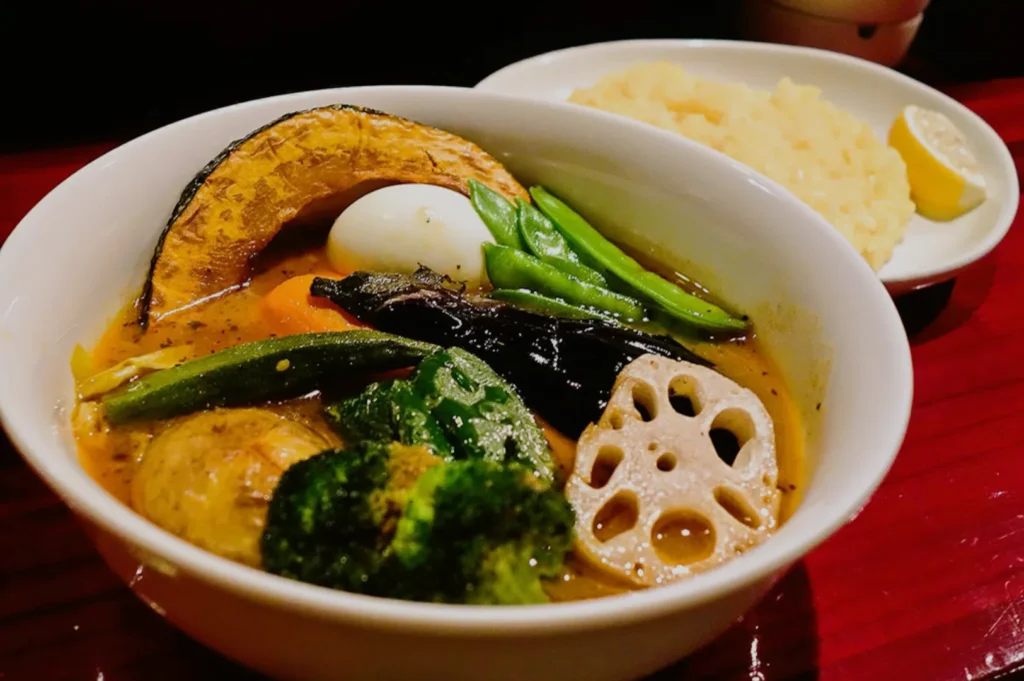
When a steaming bowl of authentic Hokkaido soup curry is placed before you, the first thing you notice is the vibrant arrangement. A deep, aromatic broth cradles a colourful landscape of flash fried vegetables, while a separate plate holds a perfectly portioned mound of Japanese short grain rice. For many diners in Singapore, this separation often leads to a moment of hesitation. Should you pour the soup over the rice? Should you dump the rice into the soup?
In the bustling streets of Sapporo, where this soul food originated, the act of eating is just as intentional as the cooking process. While there is no rigid law governing your meal, observing how the locals navigate their bowls reveals a set of traditions designed to maximise flavour, preserve texture, and honour the craftsmanship of the broth.
The Art of the Dip: Why Separation Matters
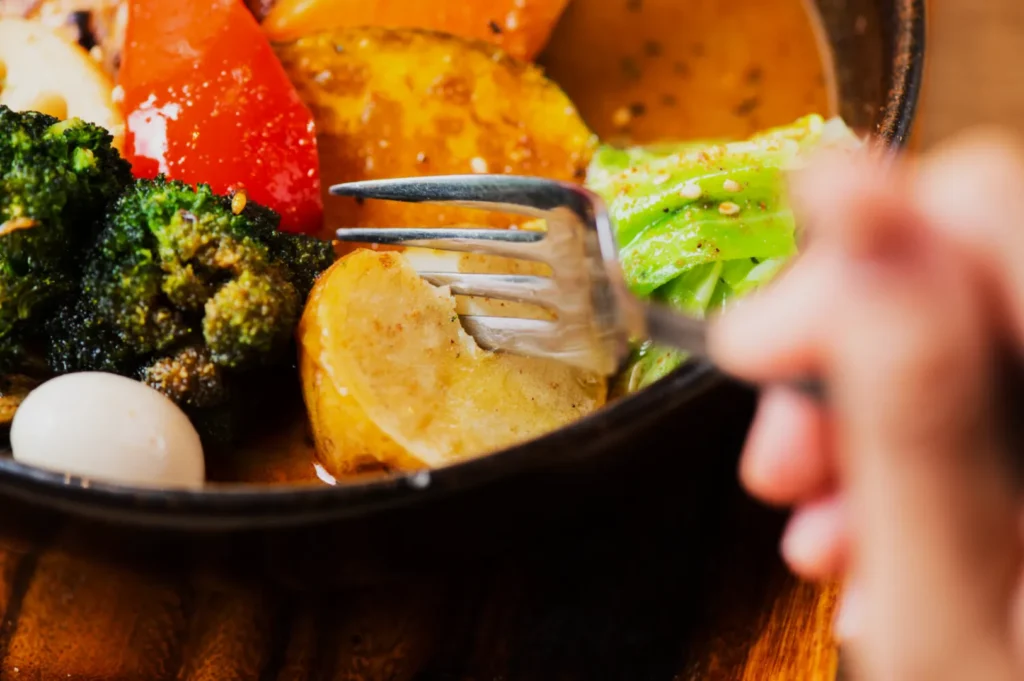
The most prevalent method you will observe among locals in Sapporo is the “dip” technique. This involves taking a spoonful of rice from your side plate and partially submerging it into the soup. There is a functional beauty to this approach. Because our broth is a light, refined liquid rather than a thick gravy, it behaves differently than the sauces found in typical curry restaurants. By dipping the rice, you allow the grains to soak up the aromatic oils and spices on the surface of the broth without losing their fluffy, Japanese short grain integrity.
Locals prefer this method because it prevents the rice from becoming soggy. If you were to pour the soup over the rice, the bottom layer of grains would eventually sit in a pool of liquid, losing that delightful chew that defines high quality Japanese rice. When you dip, you control the ratio of soup to grain in every single mouthful. This ensures that the delicate balance between the savoury chicken broth and the neutral, grounding rice remains perfect throughout the meal. This method also allows the heat of the spices to be tempered by the rice, providing a more manageable and nuanced flavour profile.
To Mix or Not to Mix: The Great Debate
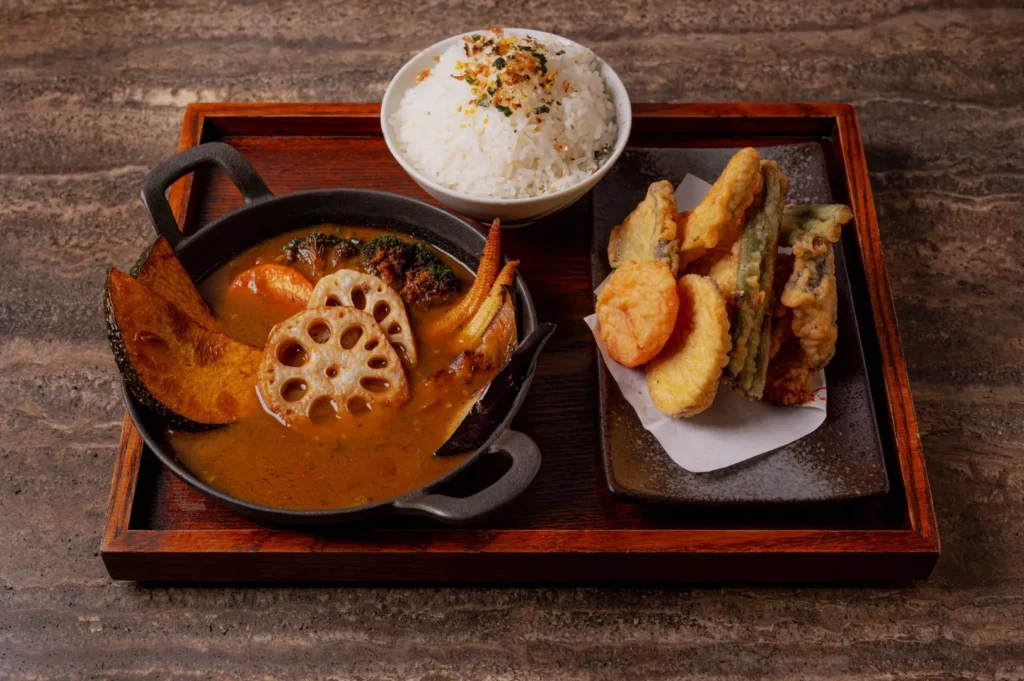
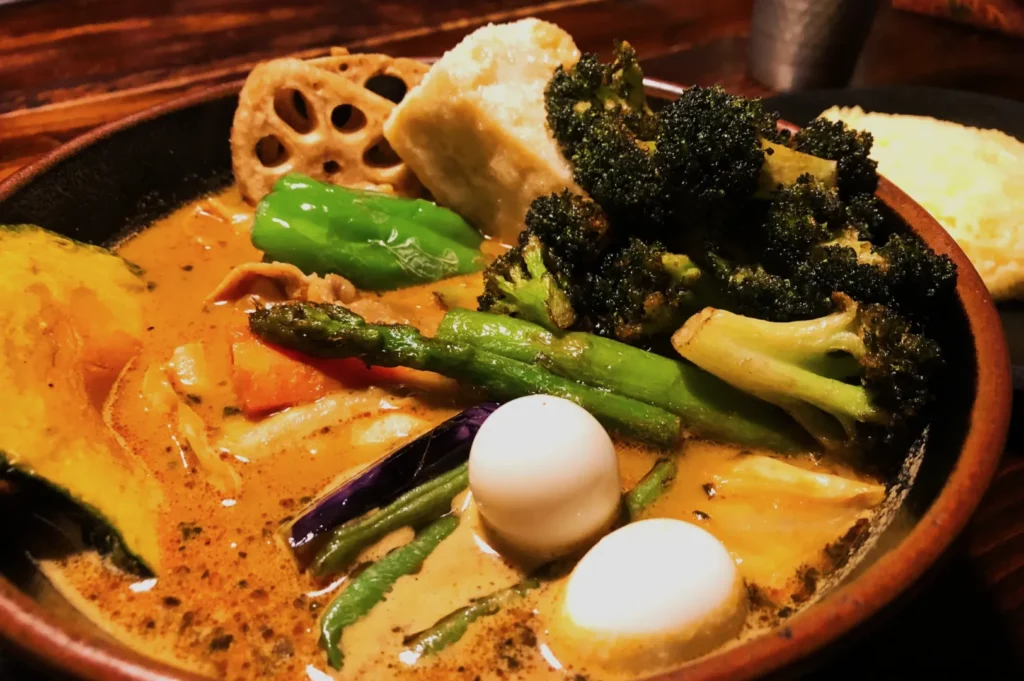
One of the most common questions we see in our establishment is whether it is acceptable to mix the rice and soup together into one unified bowl. In Sapporo, you will rarely see a local dump their entire plate of rice into the soup at the beginning of the meal. The reason for this is primarily textural. A signature element of our approach is the su-age technique, where we deep fry vegetables like lotus root, aubergine, and bell pepper without any batter. These vegetables are placed carefully atop the soup to maintain their crispness.
Mixing everything together immediately causes these vibrant vegetables to submerge and soften. The charred sweetness of the red bell pepper or the snap of a lotus root is best enjoyed when they are relatively dry. However, there is a variation of mixing that locals do enjoy towards the end of the meal. Once the majority of the vegetables and the tender chicken have been consumed, it is quite common to add the last few spoonfuls of rice into the remaining broth. This creates a sort of “risotto” finish, ensuring that not a single drop of the nutrient dense chicken stock is wasted. In this context, mixing is seen as a final, comforting act of appreciation for the chef’s work.
The Sip: Appreciation of the Broth
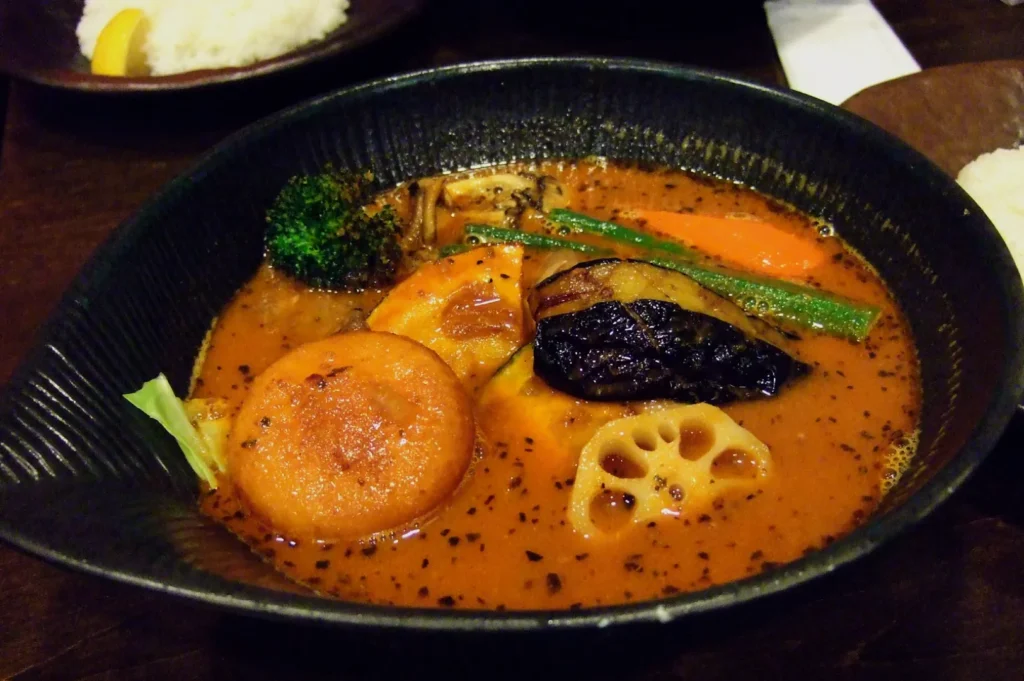
In many western dining cultures, sipping soup directly from the bowl might be considered informal. In the context of Hokkaido soul food, however, the “sip” is a fundamental part of the experience. Before even touching the rice or the vegetables, locals will often take a small sip of the broth directly from the spoon. This allows them to calibrate their palate to the spice level and the richness of the base. It is a moment of pure connection with the aromatic heart of the dish.
Because our soup is built on a foundation of meticulously simmered chicken stock and spices that have been bloomed in oil, the liquid itself is the primary hero. Sipping the broth allows you to taste the subtle notes of tomato paste, the earthiness of cumin, and the woody scent of bay leaf. It is a light, drinkable experience that differs greatly from the heavy, flour based curries found elsewhere. In Sapporo, the sound of someone sipping their soup is a sign of a meal well enjoyed. It indicates that the broth has achieved the right balance of umami and spice, providing a warming sensation that is perfect for any weather.
Managing the Vibrant Vegetable Landscape
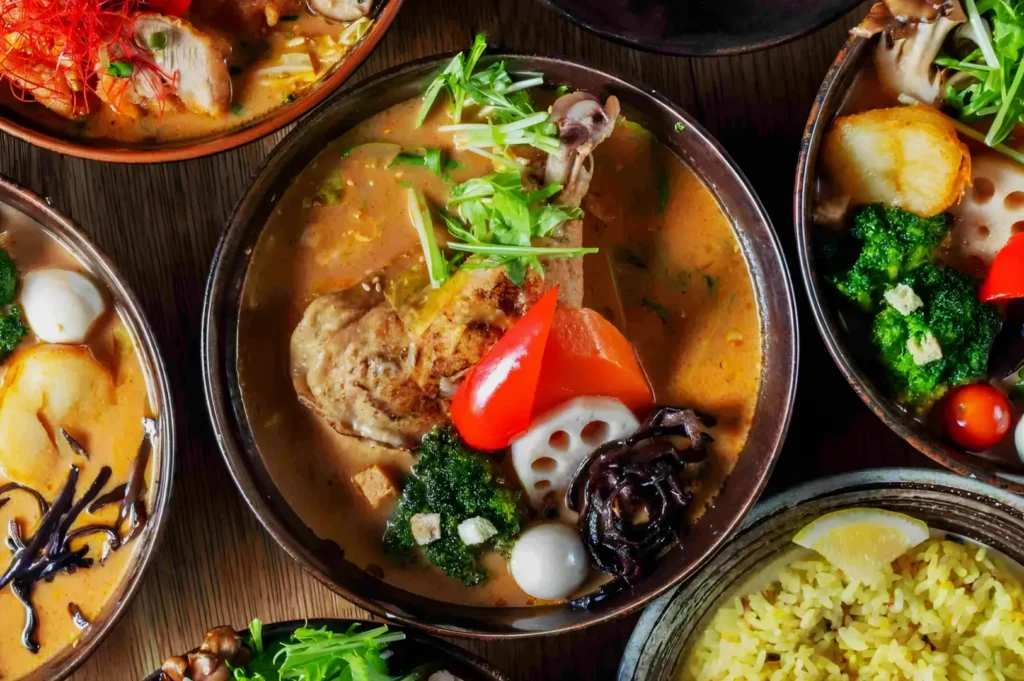
How one handles the vegetables is another area where local Sapporo habits shine. At Soup Curry by Ki-Setsu, we use specific Japanese cutting methods to ensure that each vegetable cooks evenly and presents beautifully. When locals eat, they tend to treat the vegetables as individual highlights. Rather than cutting everything up into small pieces at once, they pick up a piece of kabocha squash or a potato, dip it briefly into the soup, and eat it whole or in large bites.
This “individualised” approach ensures that the flavours do not become muddled. You can appreciate the buttery texture of the potato separately from the slightly bitter crunch of the broccoli. By not mixing the vegetables into the rice, you preserve the intentional contrast between the “bounty of the land” and the “aromatic sea” of the broth. It turns the bowl into a series of small, perfect moments rather than one uniform flavour. This is particularly relevant when you join us in the evening, as our space transforms into a cosy izakaya from 6 PM onwards. The slower pace of an izakaya encourages this deliberate, piece by piece enjoyment of the food.
The Lemon Wedge: A Secret Tool for Contrast
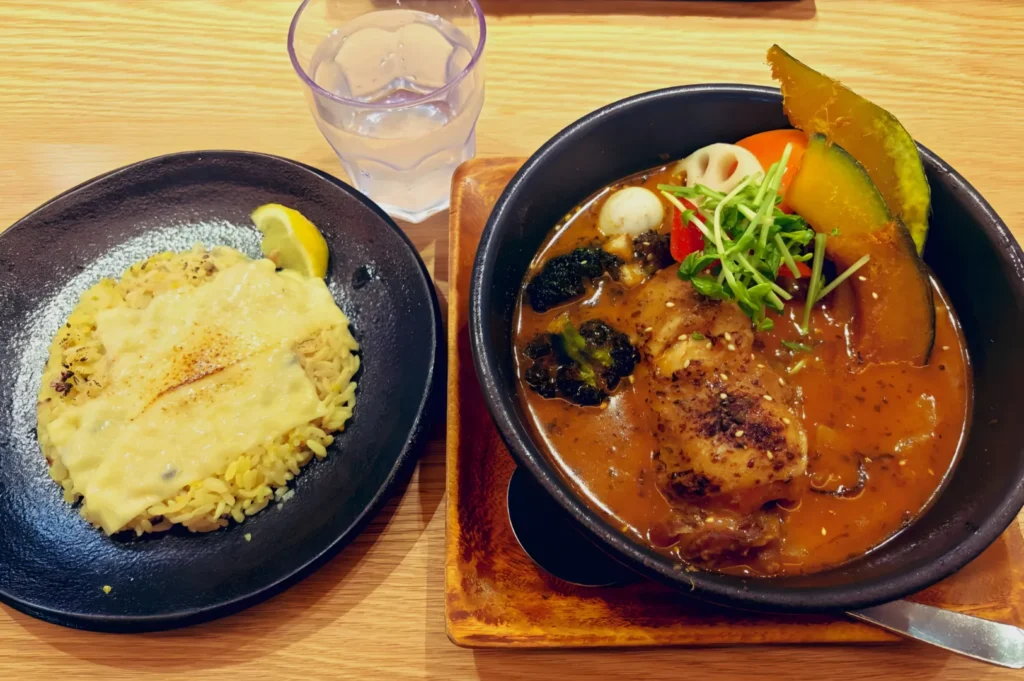
If you look closely at the rice plate in a traditional Sapporo shop, you will often find a small lemon wedge. Many first timers are unsure of what to do with it. Some might squeeze it into the soup, but the local preference is actually to squeeze the lemon directly over the rice. This is a subtle but brilliant technique for palate management.
The citric acid in the lemon provides a sharp, bright contrast to the rich and spicy broth. When you take a spoonful of lemon-scented rice and dip it into the savoury chicken soup, the acidity cuts through the fats and spices, refreshing your taste buds instantly. This prevents “palate fatigue,” which can occur when eating bold, spice-heavy dishes. It makes every bite feel as vibrant as the first. This focus on balance and contrast is a hallmark of Hokkaido culinary philosophy, ensuring that the meal remains light and energising rather than heavy and somnolent.
The Role of the Spoon and Fork
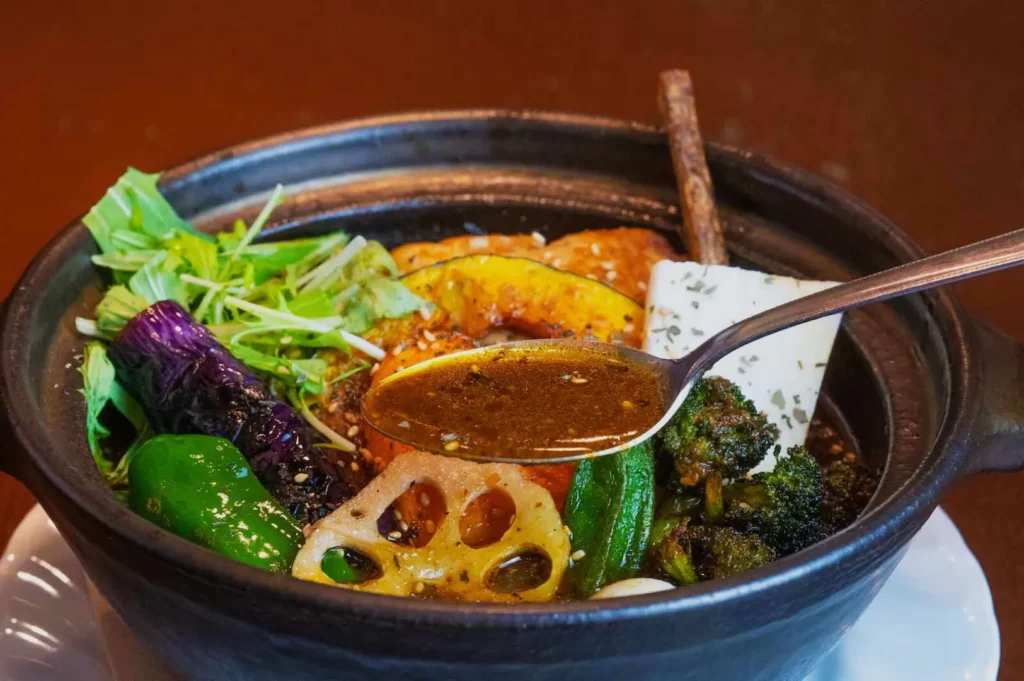
In most typical curry restaurants, you might be given a variety of utensils. In the world of soup curry, the spoon is your most important tool. Locals use a large, relatively flat spoon that is designed to hold both a portion of rice and a generous amount of broth. While a fork is often provided to help pull the tender chicken meat away from the bone, the majority of the meal is navigated with the spoon alone.
There is a specific grace to watching a local use their spoon to gently press down on a piece of pumpkin to break it, then scooping up a bit of rice to catch the escaping juices. The spoon acts as a vessel for the harmony of the dish. It allows you to combine the liquid and solid elements of the meal in a way that chopsticks or a fork simply cannot. At our restaurant, we provide utensils that are chosen specifically to facilitate this traditional way of eating, ensuring that you can navigate your bowl with ease and authenticity.
Authenticity in Every Bite: The Ki-Setsu Approach
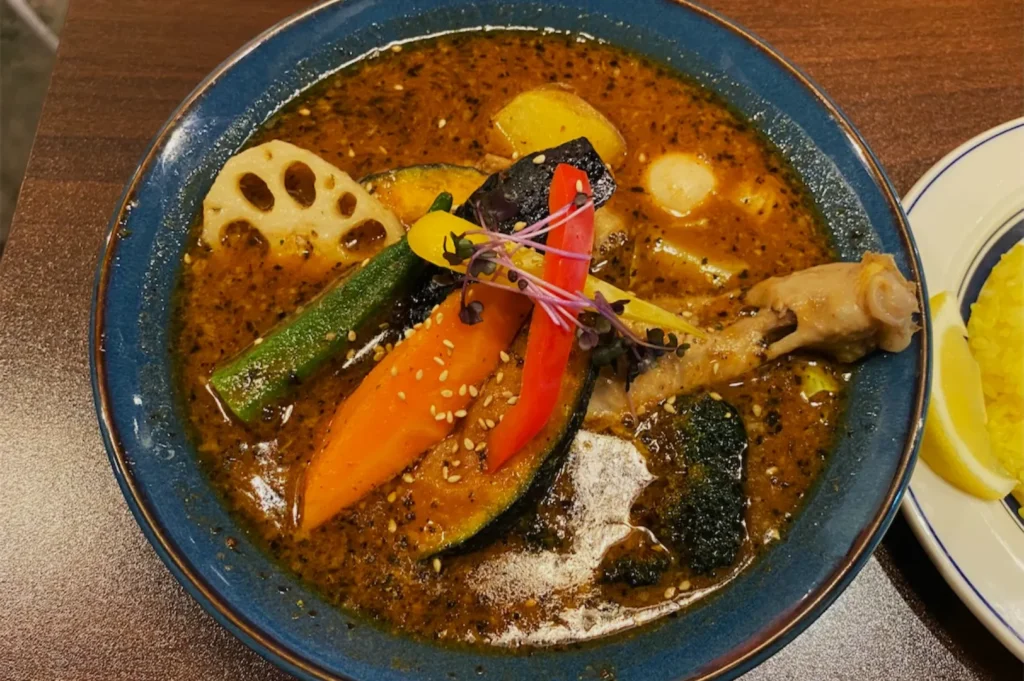
At Soup Curry by Ki-Setsu, we are passionate about bringing these Sapporo traditions to Singapore. We don’t just provide the food; we provide the cultural context that makes the food special. Our broth is prepared with the same dedication to clarity and spice blooming that you would find in the best shops of Hokkaido. We choose our vegetables, from the aubergine to the lotus root, for their ability to hold up to the su-age technique and provide that essential textural contrast.
When we see our guests adopting the dip and sip method, it brings a smile to our faces. It means that the “soul food” nature of the dish is being felt. Whether you are seeking a comforting lunch or a relaxed evening in our izakaya setting, the way you interact with your bowl is part of the story. By eating like a local, you are honouring the regional identity of Sapporo and the agricultural bounty of Hokkaido. It is a way of showing respect for the ingredients and the time intensive process of simmering the perfect chicken stock.
Why the Local Method Enhances the Meal
Ultimately, the reason locals in Sapporo eat soup curry this way is because it simply tastes better. The separation of rice and soup, the careful dipping, and the strategic use of lemon all serve a singular purpose: to protect the integrity of the flavour. When the ingredients are as fresh as ours and the broth is as carefully constructed, you want to taste every single element clearly. Mixing everything into a mush might be faster, but it robs the diner of the discovery that happens when you taste a deep fried potato and a spicy broth in perfect, distinct harmony.
We invite you to experiment with these techniques the next time you visit.
- Start with a sip of the broth to wake up your palate.
- Squeeze the lemon over your rice to prepare for the contrast.
- Then, begin the rhythmic process of dipping your rice and selecting your vegetables one by one.
You will find that the meal lasts longer, the flavours are more pronounced, and the overall experience is significantly more rewarding.
Embracing the Soul of Hokkaido
Soup curry is more than just a dish; it is a cultural icon of northern Japan. It represents a spirit of warmth, resilience, and a deep appreciation for the land. By learning how to eat it like a local, you are participating in a tradition that has brought comfort to generations of people in Sapporo. At Soup Curry by Ki-Setsu, we are honoured to be the bridge between these traditions and the vibrant food scene of Singapore.
The next time you find yourself before one of our bowls, remember the dip, the mix, and the sip. Each motion is a way to unlock the full potential of our aromatic broth and tender chicken. Whether you are sharing a meal with friends or enjoying a quiet moment of soul food, the Sapporo way will ensure that your experience is as authentic and warming as a winter’s day in Hokkaido. We look forward to seeing you at our table and sharing the true heart of soup curry with you.