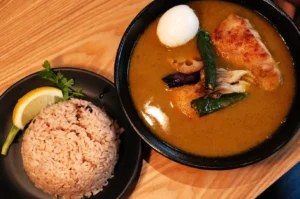
For decades, curry was defined by a thick, gravy-like consistency with stewed ingredients and heavy textures. Then, from Sapporo, a culinary revolution reimagined curry as a light, vibrant soup.
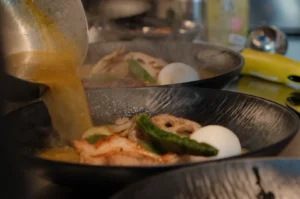
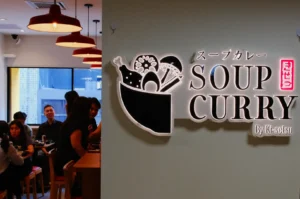
At Soup Curry by Ki-Setsu in Singapore, guests discover a clear, aromatic soup base with fresh, crisp vegetables, breaking all the traditional rules. This approach prioritises clarity and individual flavors over thickness and blending, fundamentally shifting the curry experience.
Reimagining Curry Through the Lens of Liquid Umami
The most significant rule broken by the creators of Sapporo soup curry was the necessity of a thickener. Most typical Japanese curry variations rely on a wheat-based roux to create a heavy mouthfeel.
The creators of this northern soul food decided to abandon the flour entirely, focusing instead on the restorative power of a soup that one could actually drink.
The Foundation of Bones and Spices
To achieve a rich depth without the weight, the process begins with a complex stock. We utilise chicken bones and sometimes a mix of other proteins, simmered for hours with charred onions, ginger, and garlic.
This creates a thin but powerful liquid that carries the aroma of the spices more effectively than a thick gravy ever could. When you eat a bowl of this, you are not just tasting a sauce; you are experiencing a layered bouillon that has been infused with curry powder, cumin, and coriander.
The Balance of Acidity and Sweetness
In many other restaurants, the sweetness of a curry comes from grated apples or honey. However, in the process of reimagining curry, Hokkaido chefs looked toward tomato paste to provide both a subtle red hue and a necessary acidity. This acidity cuts through the savoury notes of the meat, ensuring that even a large meal feels light.
By adding garam masala toward the end of the cooking process, the bright, top-note flavours are preserved, rather than being lost in a long, heavy simmered process.
Why Famous Soup Curry Restaurants Prioritise Texture
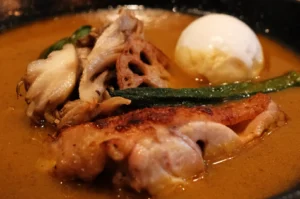
If you visit famous soup curry restaurants in Sapporo, you will notice a striking visual difference in the bowl. While a classic curry often hides its ingredients under a blanket of brown, the Hokkaido approach treats the toppings as individual stars. This is where the reimagining curry movement truly broke the rules of texture.
The Art of the Su-age Technique
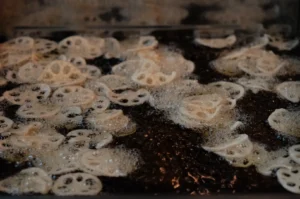
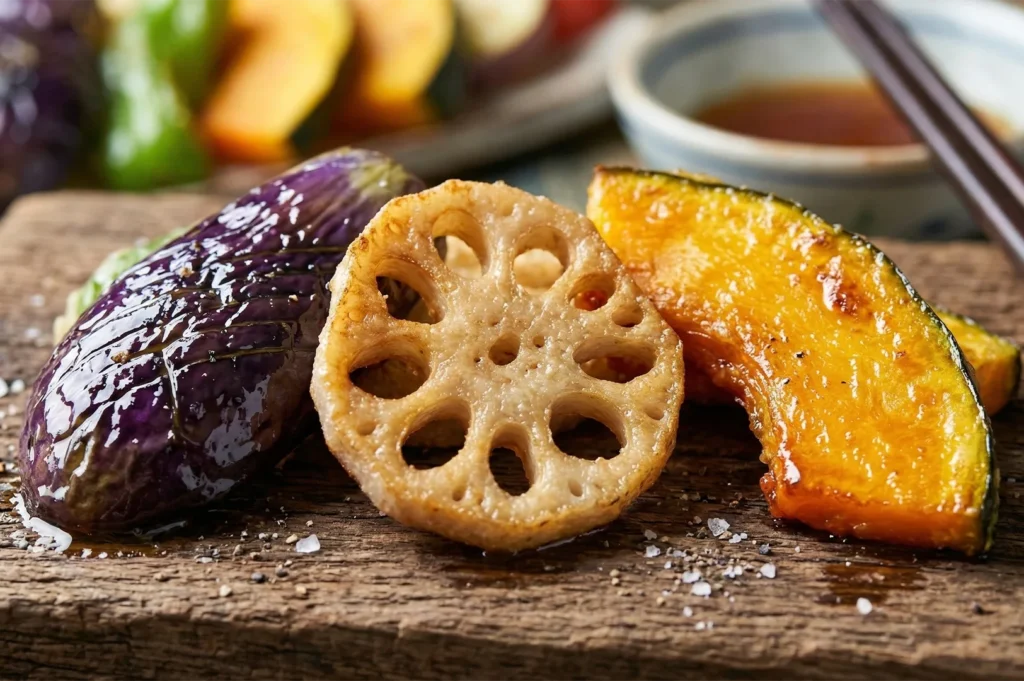
In our kitchen, we follow the tradition of the Japanese su-age technique. This involves deep fried methods without any batter or flour. By flash frying the fresh vegetables, we create a contrast that is entirely absent in a standard stew.
Eggplant: When deep fried, it becomes silky and absorbs the soup like a sponge.
Lotus Root: It retains a satisfying snap that provides a structural counterpoint to the tender chicken.
Pumpkin and Potato: These root vegetables are cooked until they are sweet and creamy on the inside while maintaining a golden brown exterior.
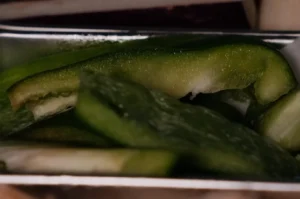
This method ensures that the vegetables do not become waterlogged. Instead of being simmered until their identity is lost, the bell peppers, okra, and shiitake mushrooms are added to the soup at the very last moment. This preserves their vibrant colors and natural taste.
The Components of an Authentic Soup Curry Bowl
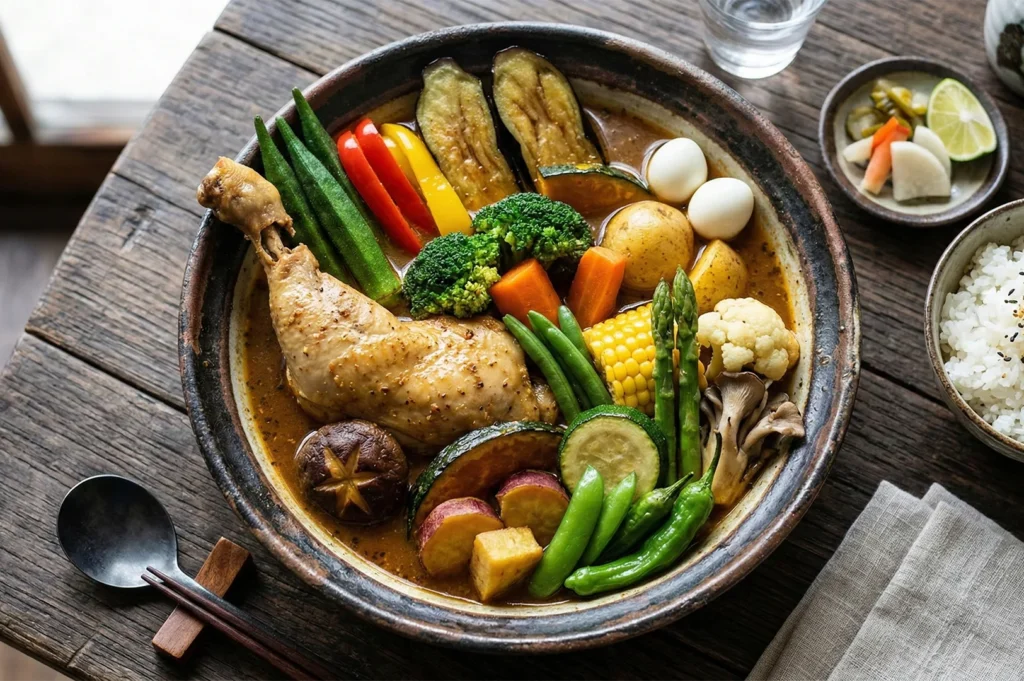
To understand how this dish broke the rules, one must look at the specific, non-traditional additions that have become famous staples of the genre. An authentic soup curry is not just about the liquid; it is a carefully curated assembly of diverse textures.
Beyond Meat and Potatoes
While a typical Japanese curry might feature chunks of beef or pork, the original soup curry often features a whole chicken leg, cooked until the meat falls off the bone. But the innovation does not stop there. The inclusion of quail eggs is a signature move by many soup curry restaurants, adding a tiny burst of creamy yolk that complements the spiced broth.
The Role of Freshness
The use of fresh ingredients is non-negotiable. In the Hokkaido tradition, the menu often changes with the seasons. You might find carrots that are incredibly sweet due to the cold northern climate, or perhaps a seasonal shiitake that adds a deep earthiness. By reimagining curry as a seasonal soup, chefs in Japan turned a shelf-stable comfort food into a celebration of the harvest.
In a traditional Japanese curry house, you might have one or two choices of spice. However, soup curry restaurants introduced a granular spice level system that was revolutionary for its time. This allowed locals and tourists alike to tailor their meal to their exact preference, from a mild, warm glow to an intense chilli experience.
The Spice Symphony
We do not rely on a single source of heat. Instead, the spice level is built using a combination of dried chilli, black pepper, and the warm notes of garam masala. Because the soup is water-based, the heat is “cleaner” — it hits the palate and then dissipates, rather than lingering in a heavy, oily coconut milk or dairy base. This makes it a delicious option for those who want to experience complex spices without the weight of coconut or cream.
Serving the Dish: Separating Rice from Soup
One of the most visual ways that reimagining curry changed the rules was in the presentation. Typically, curry is served poured directly over rice. In Hokkaido, this is considered a culinary faux pas.
The Dipping Ritual
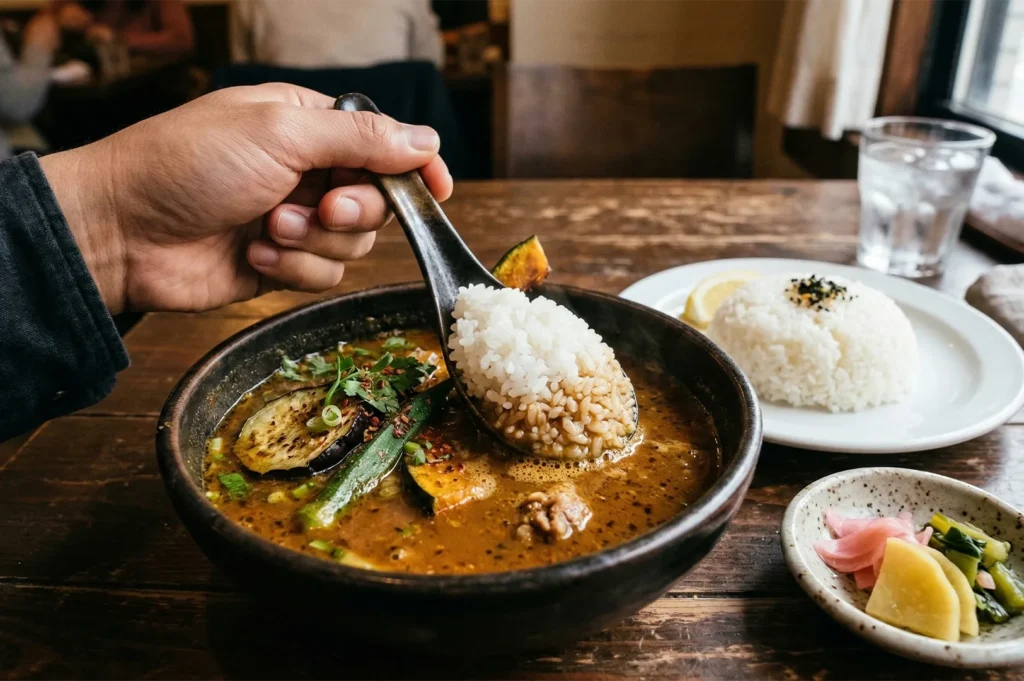
The rice is always served on a separate plate, often accompanied by a small pickle or a wedge of lemon. This is functional: it allows the diner to control exactly how much soup each spoonful of rice absorbs.
Scoop a bit of rice onto your spoon.
Dip the spoon into the delicious soup.
Ensure the rice is just saturated but not soggy.
Follow with a bite of a deep fried potato or lotus root.
This ritual changes the act of eating from a passive experience into an active, mindful one. It respects the thick nature of the rice grains and the fluidity of the broth simultaneously.
Fresh Vegetables: The Heart of the Hokkaido Philosophy
The focus on fresh vegetables in soup curry is perhaps its most “rule-breaking” feature. In most curry cultures, vegetables are the secondary support for the meat. In Sapporo, the vegetables often are the main event.
A Garden in a Bowl
A single bowl from a famous Hokkaido establishment might contain over ten different types of vegetables. At our restaurant, we take great pride in sourcing fresh ingredients like pumpkin, onions, and bell peppers. We use specific Japanese cutting methods to ensure that each piece, whether it is a stalk of okra or a slice of eggplant, is prepared to be the best version of itself. This focus on the “bounty of the earth” is what makes soup curry a true soul food for the people of the city.
The Atmosphere: From Sapporo Streets to Singapore Izakayas
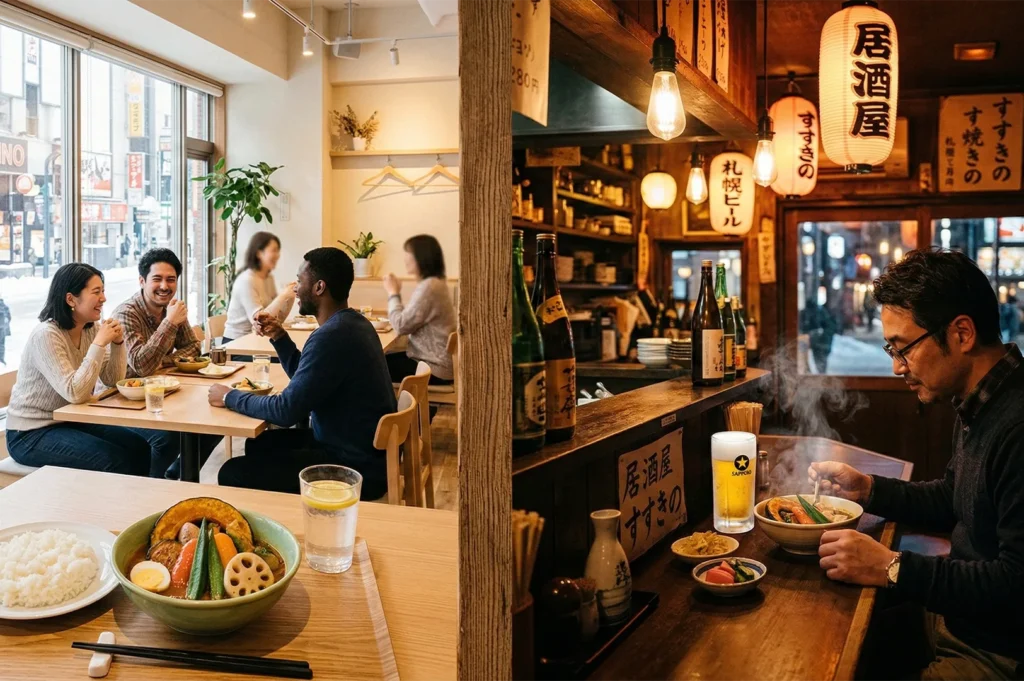
The environment in which this dish is enjoyed also breaks the rules of the fast-food curry shop. In the Chuo ward of Sapporo or near the busy Susukino station, soup curry is often enjoyed in eclectic, cosy spaces.
A Dual Identity
At Soup Curry by Ki-Setsu, we bring this specific Hokkaido vibe to Singapore. While we focus on providing an authentic soup curry experience during the day, our space transforms into a cosy izakaya after 6 PM.
This reflects the versatility of the soup itself: it can be a healthy, energising lunch or a warm, comforting accompaniment to a night of drinks and shared plates. The aroma of ginger, garlic, and simmering chicken bones creates an inviting atmosphere that encourages guests to stay and savour the flavours.
Why You Should Not Miss This Culinary Evolution
If you have only ever had regular Japanese curry, you are missing out on a significant chapter of culinary history. The act of reimagining curry allowed for a dish that is both lighter and more intense. It is a meal that leaves you feeling satisfied but not weighed down, nourished by the fresh vegetables and the carefully simmered soup base.
Breaking the Rules for a Better Bowl
The rules were broken for a reason: to create something more balanced. By moving away from the thick roux and toward a refined soup, the chefs of Sapporo created a new category of Japanese cuisine. It is a dish that celebrates the individual over the whole, the fresh over the preserved, and the soul over the stomach.
The Future of the Soup-Based Approach
The story of reimagining curry is one of innovation and respect for ingredients. By taking the Hokkaido soup-based approach, the original soup curry pioneers proved that curry didn’t have to be a heavy, uniform sauce. It could be a vibrant, multi-textured, and deeply aromatic soup that highlights the best of the season’s fresh ingredients.
At Soup Curry by Ki-Setsu, we are honoured to be the ones bringing this rule-breaking traditional Japanese evolution to the heart of Singapore. From the tender chicken to the vibrant colors of our deep fried vegetables, every element of our bowl is a testament to that first spark of creativity in Sapporo. We invite you to pick up a spoon, dip your rice, and discover for yourself how breaking the rules created the most delicious curry experience in the world.